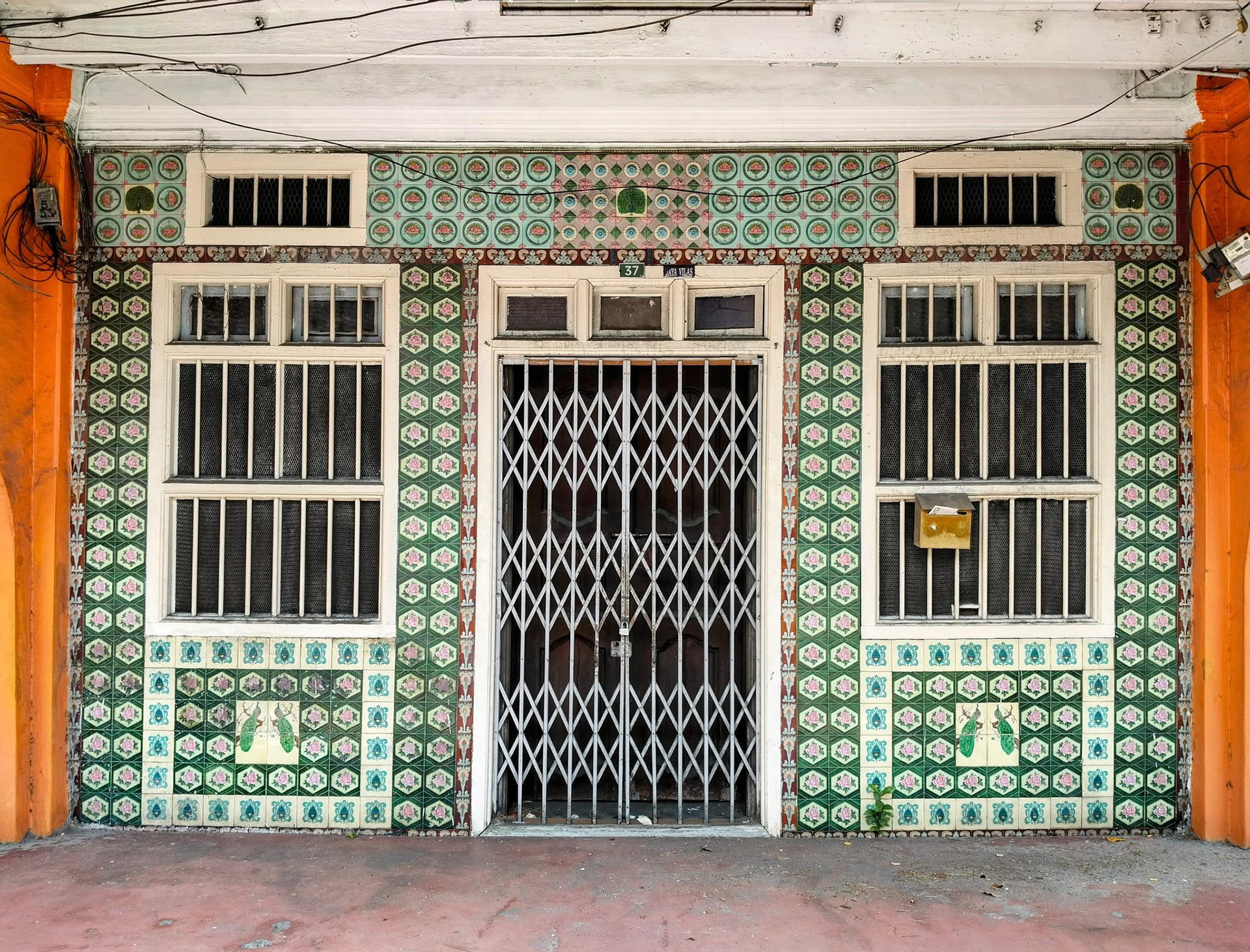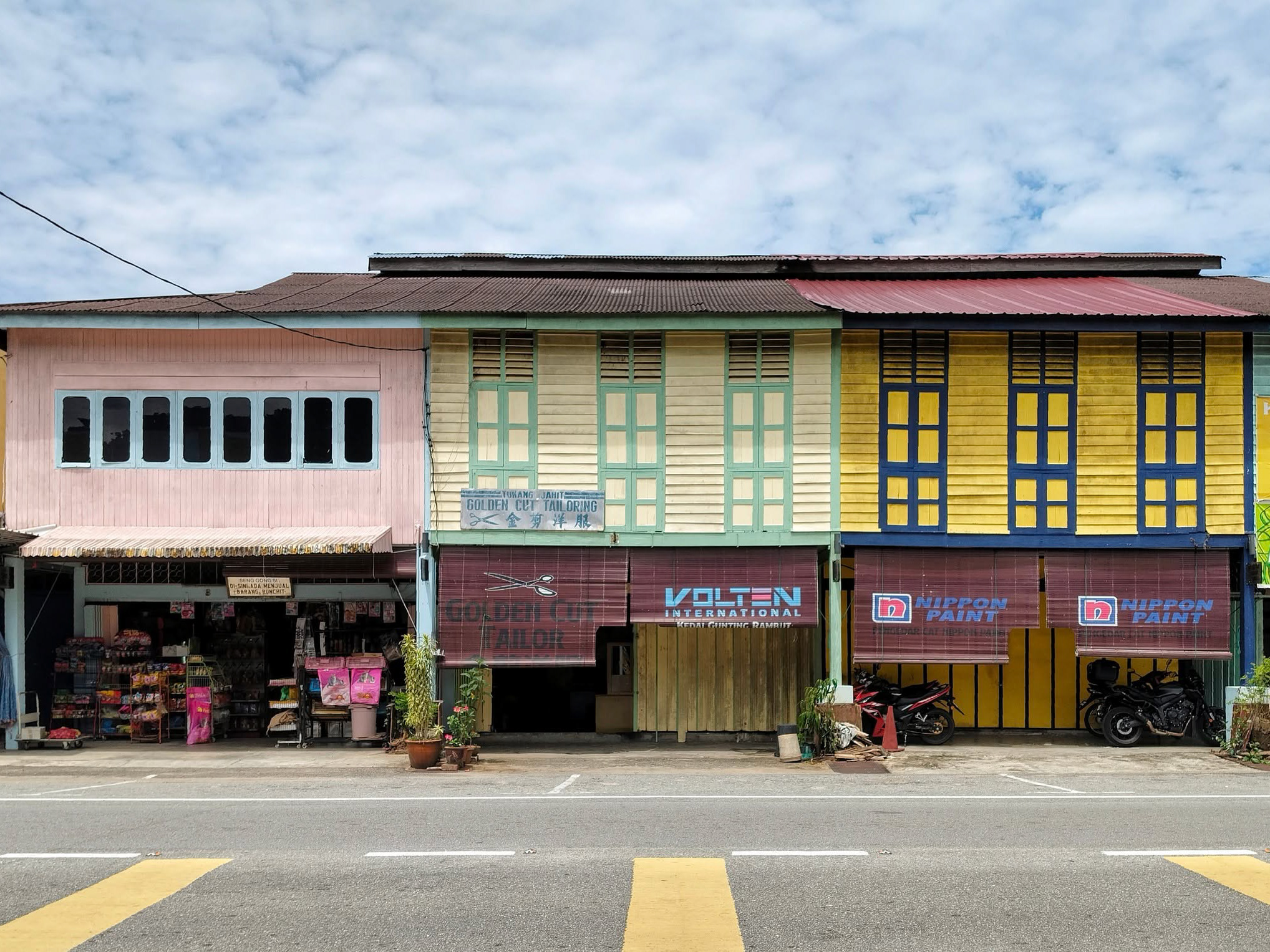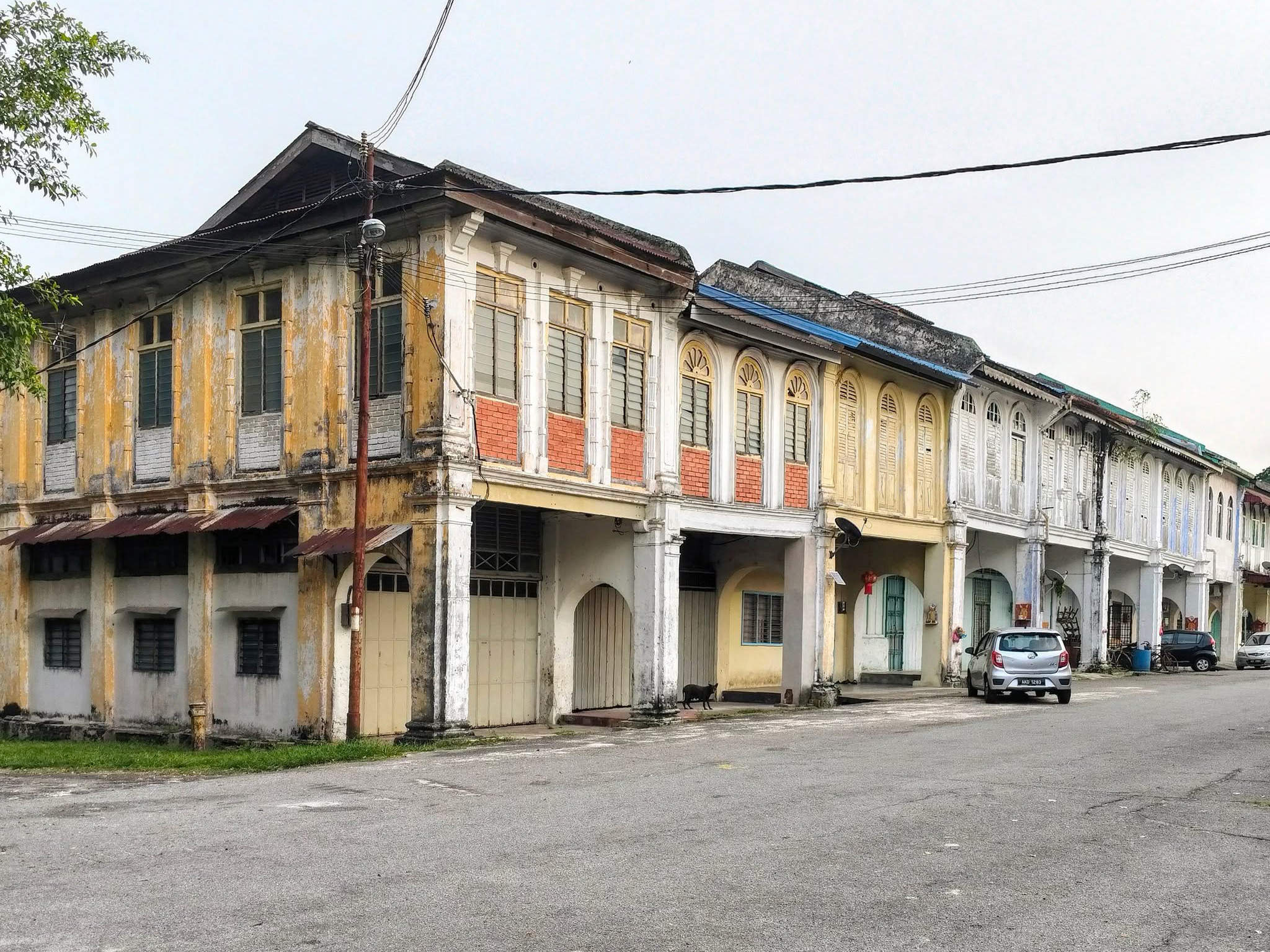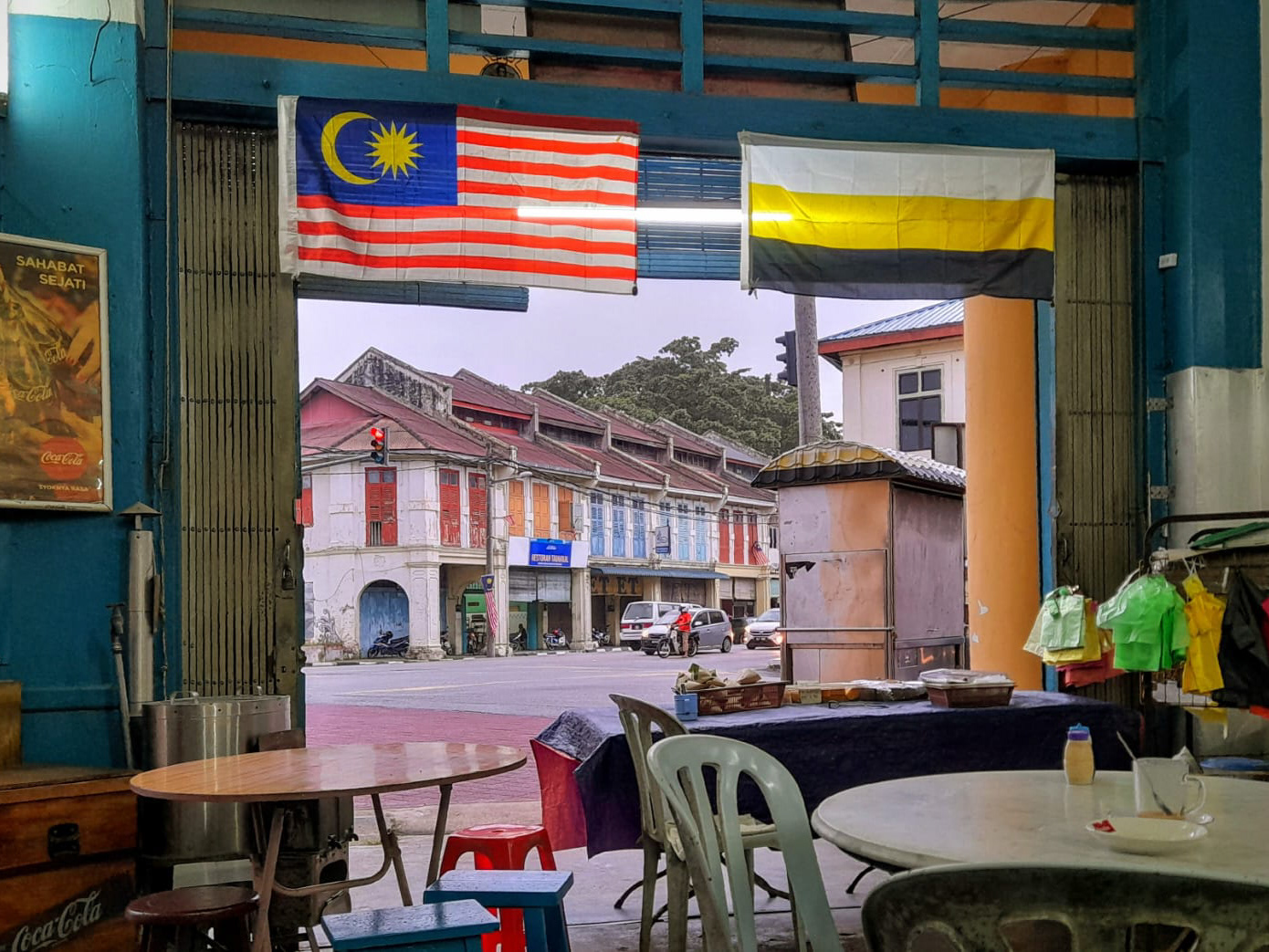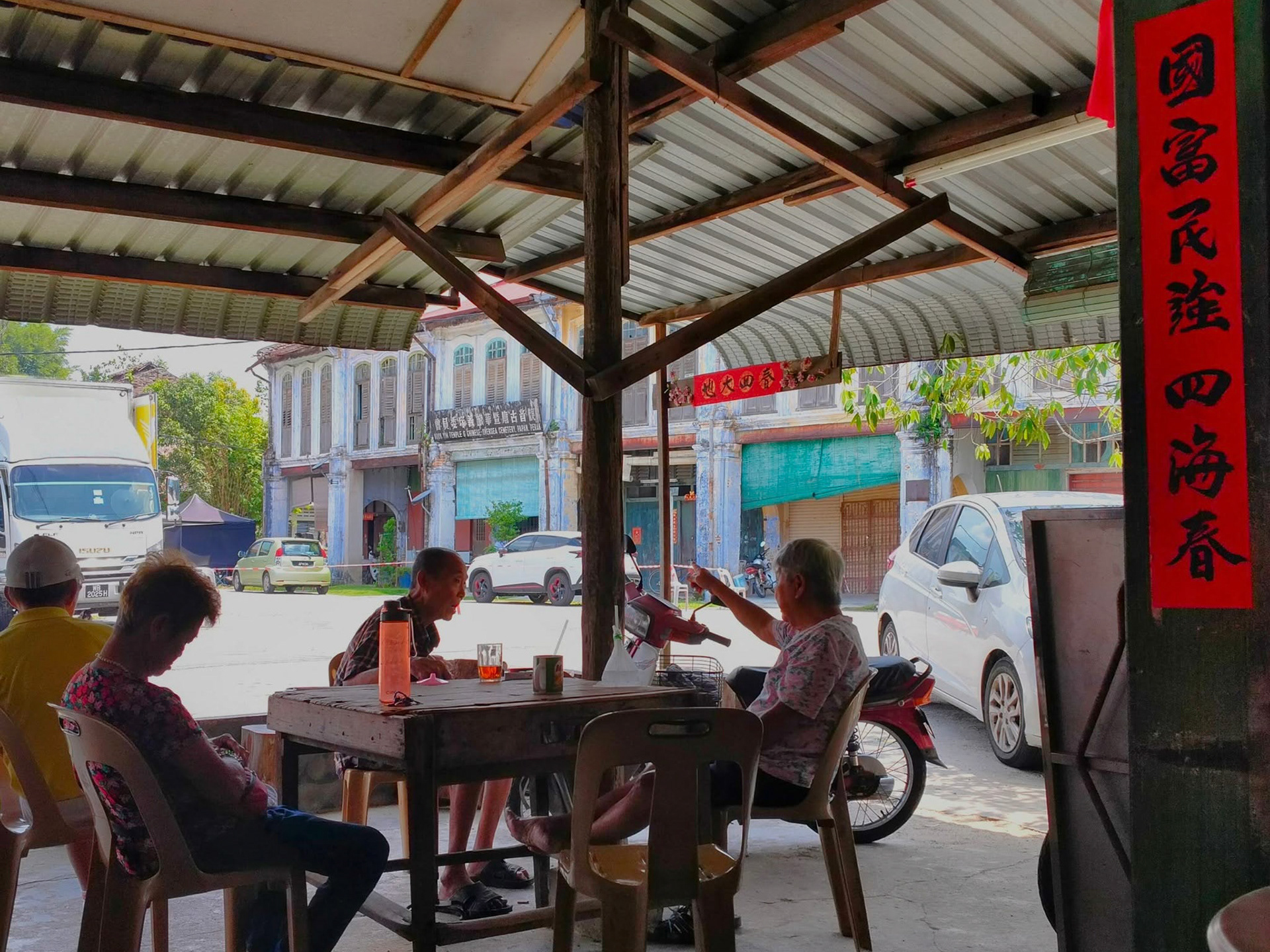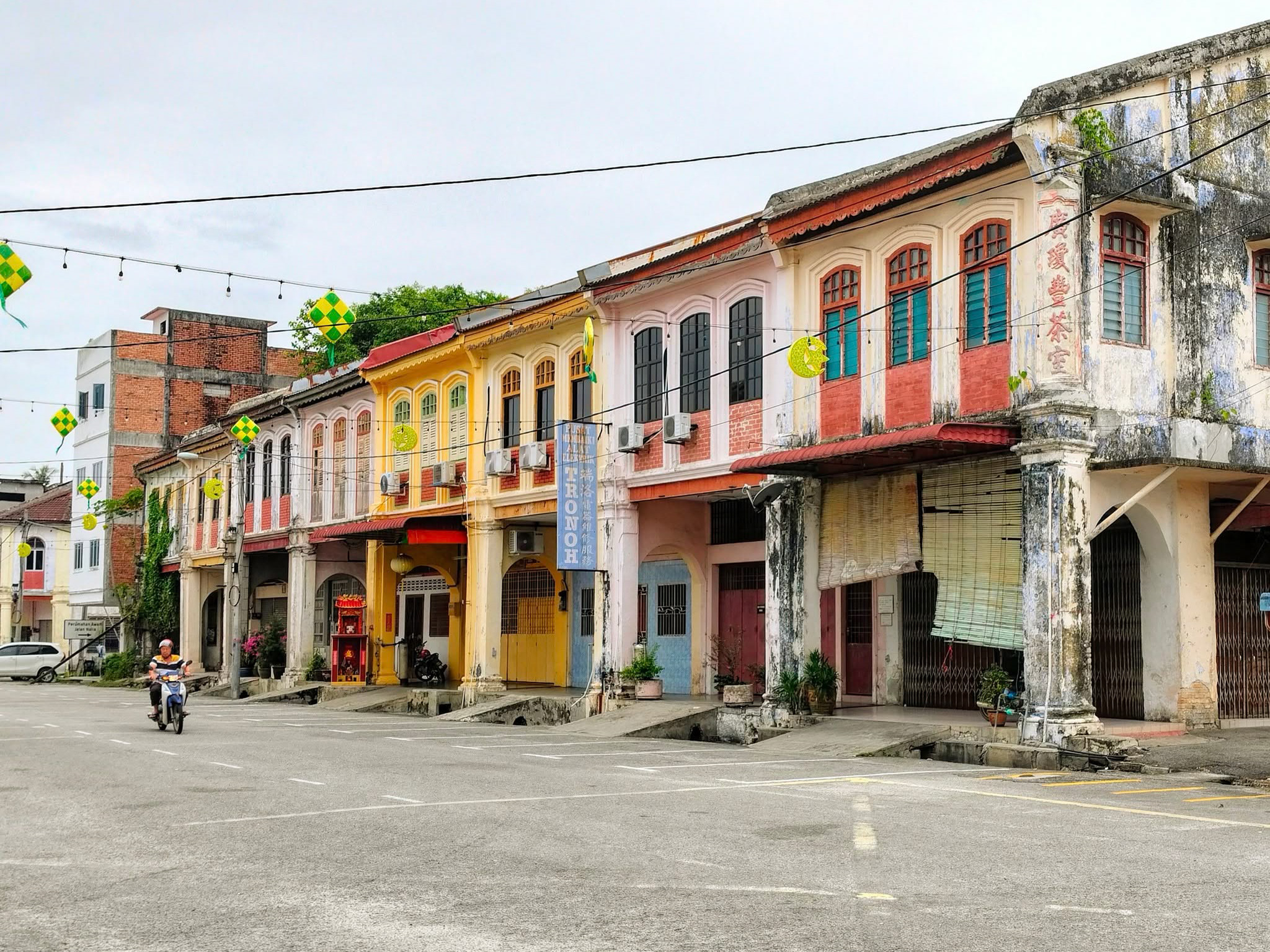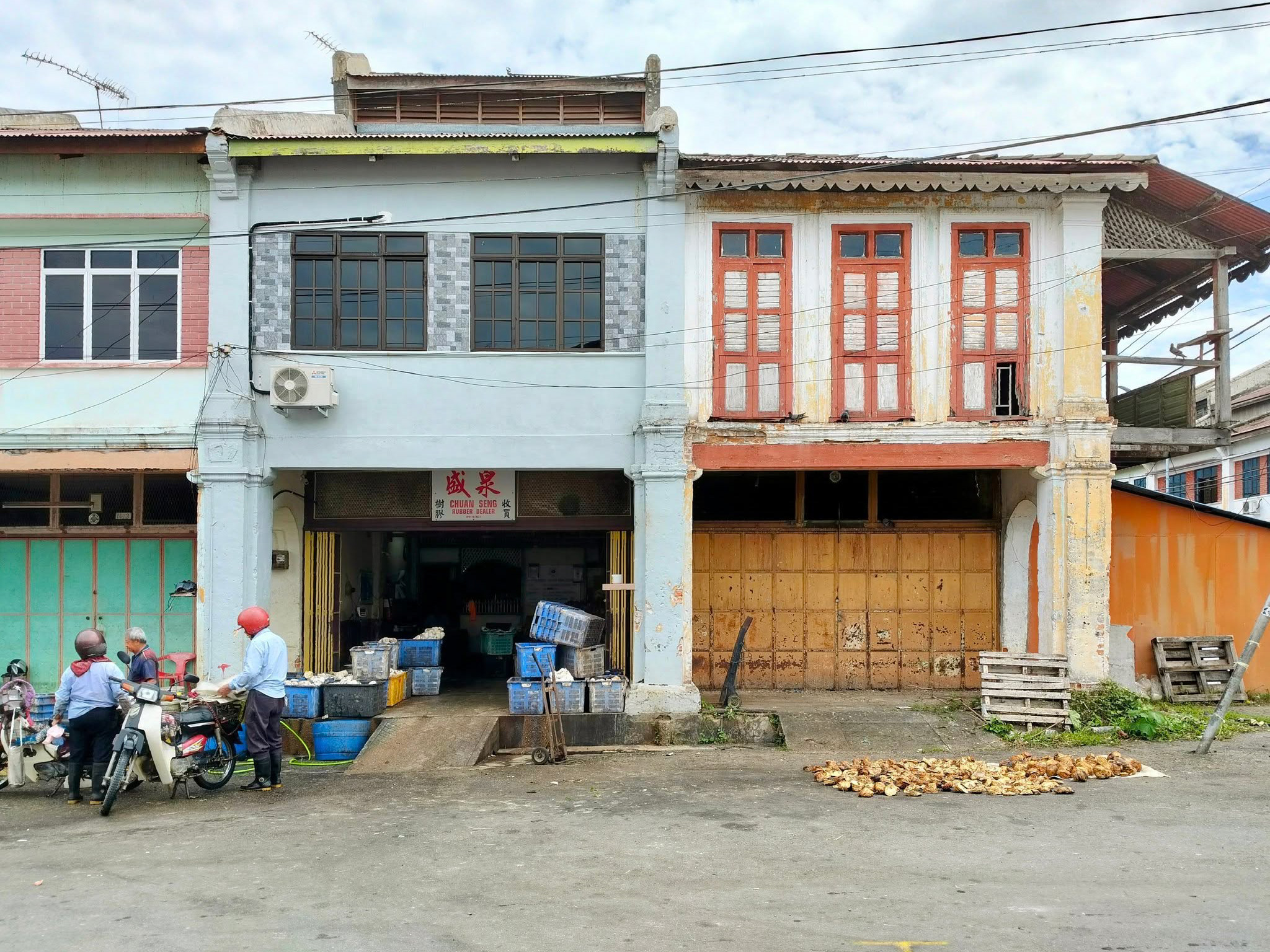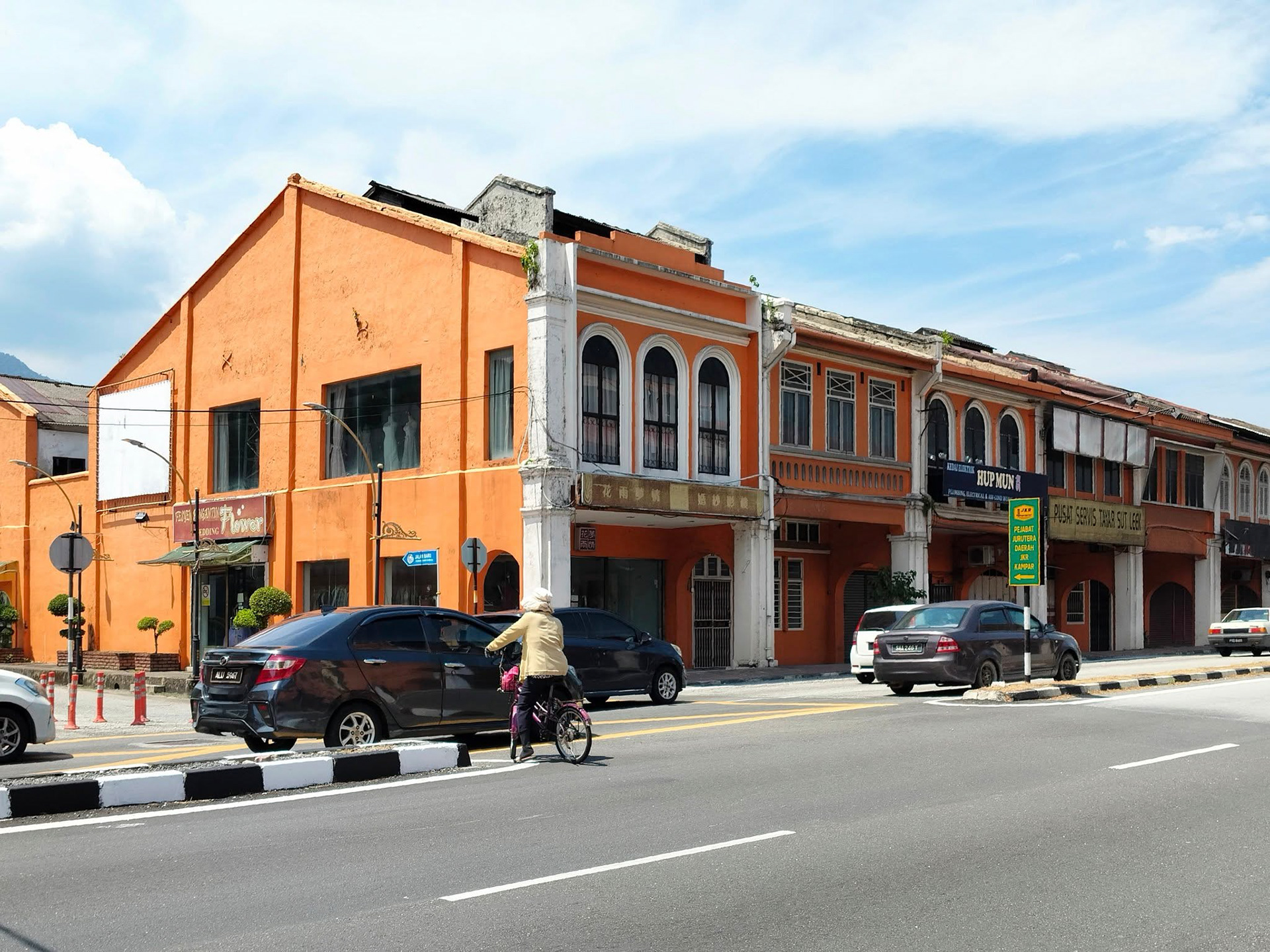
In the heart of Kampar, under the vast blue dome of a tropical sky, the orange shophouses on Jalan Besar holds still like a memory refusing to fade. The burnt orange, somewhere between rust and fire, speaks of warmth, endurance, and the clay of the earth itself. Against the sharp blue sky of Perak, they blaze like embers of a forgotten era. In the late morning, light pours over the facades, casting sharp-edged shadows beneath each arch and window. Wooden shutters hang slightly ajar. Old iron grilles remain bolted not for fear of theft, but because they have always been that way. That rust, wood, and silence can be more beautiful than glass and steel. 

Some beauty is fermented in time, like old rice wine or dried mandarin peel, gaining power and character through age. And in Kampar, where the mountains crouch in the distance and the rivers whisper through the tin-rich soil, these orange walls stand as guardians of the town’s slow-burning dignity.

An elderly woman pedals her bicycle slowly across the street, her form bowed slightly by the years, moving in calm defiance of the modern world speeding by in black sedans and silver hatchbacks.
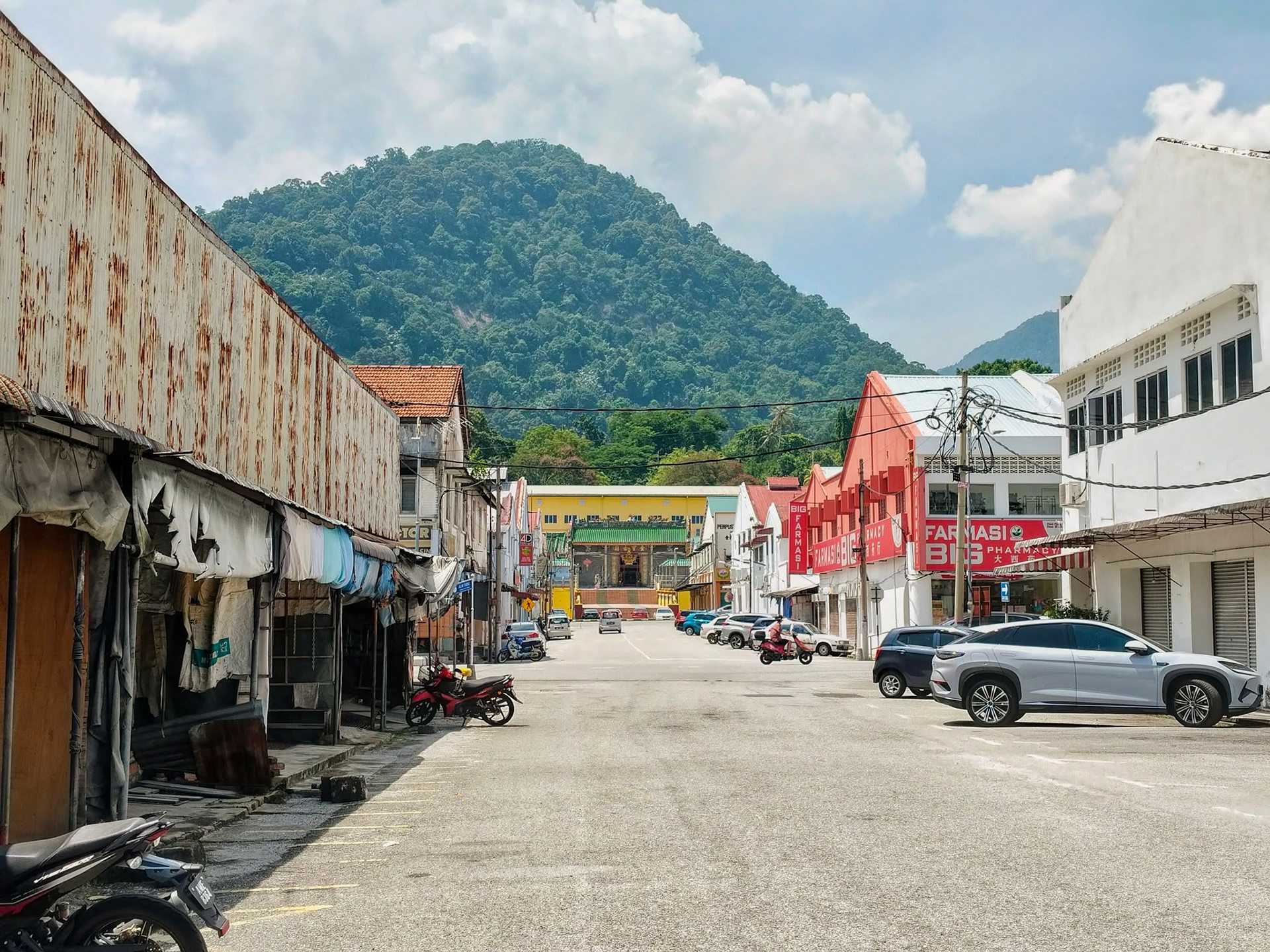
If one were to close their eyes here, they would hear a symphony of the ordinary. The humming of motorcycle engines, the lazy clank of a gate opening, symphonic chatter in Cantonese, and above it all, the gentle whisper of wind curling through the five-foot ways. Occasionally, a bird calls out from a rooftop, as if echoing the stories embedded in each wall.
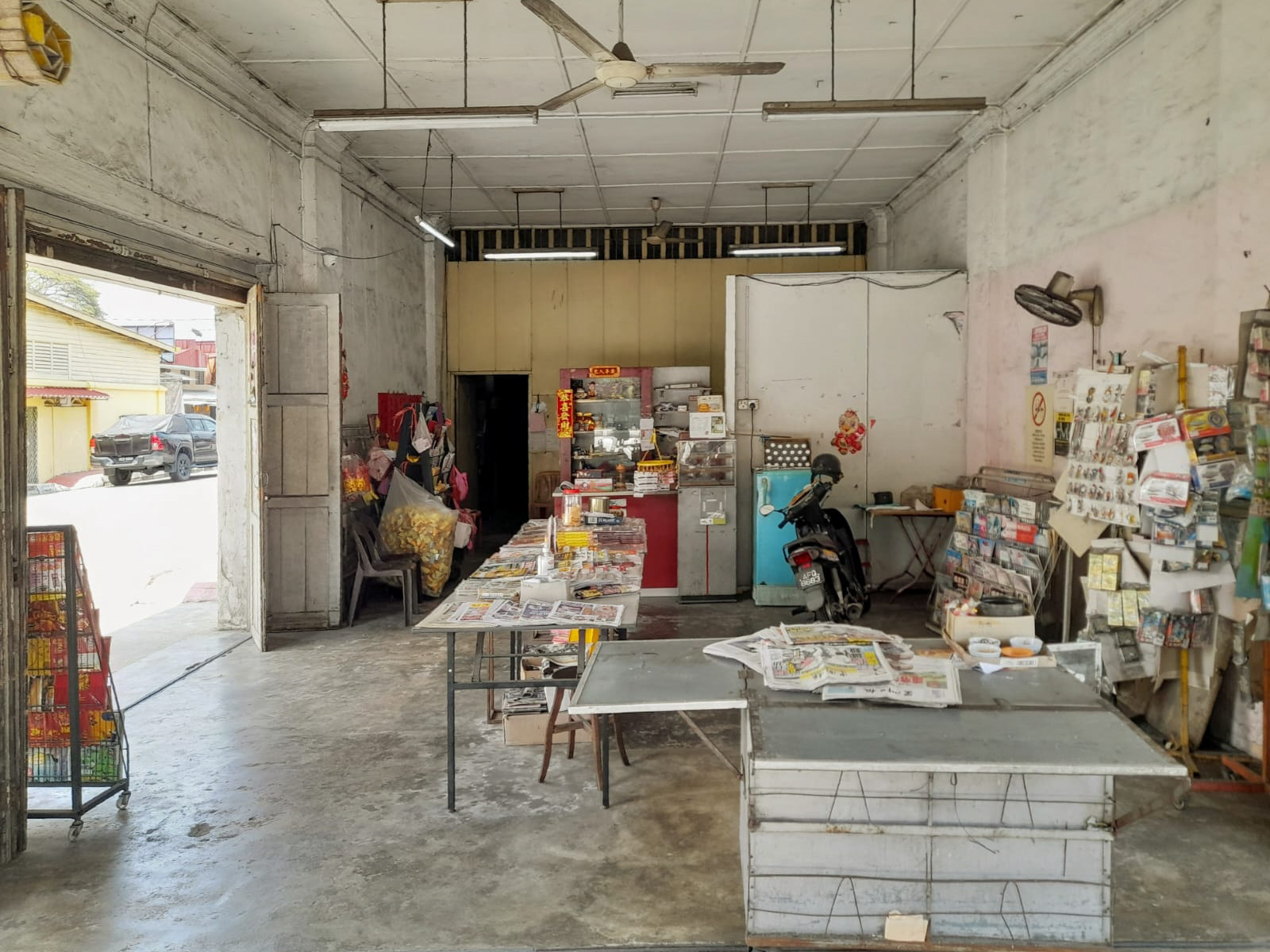
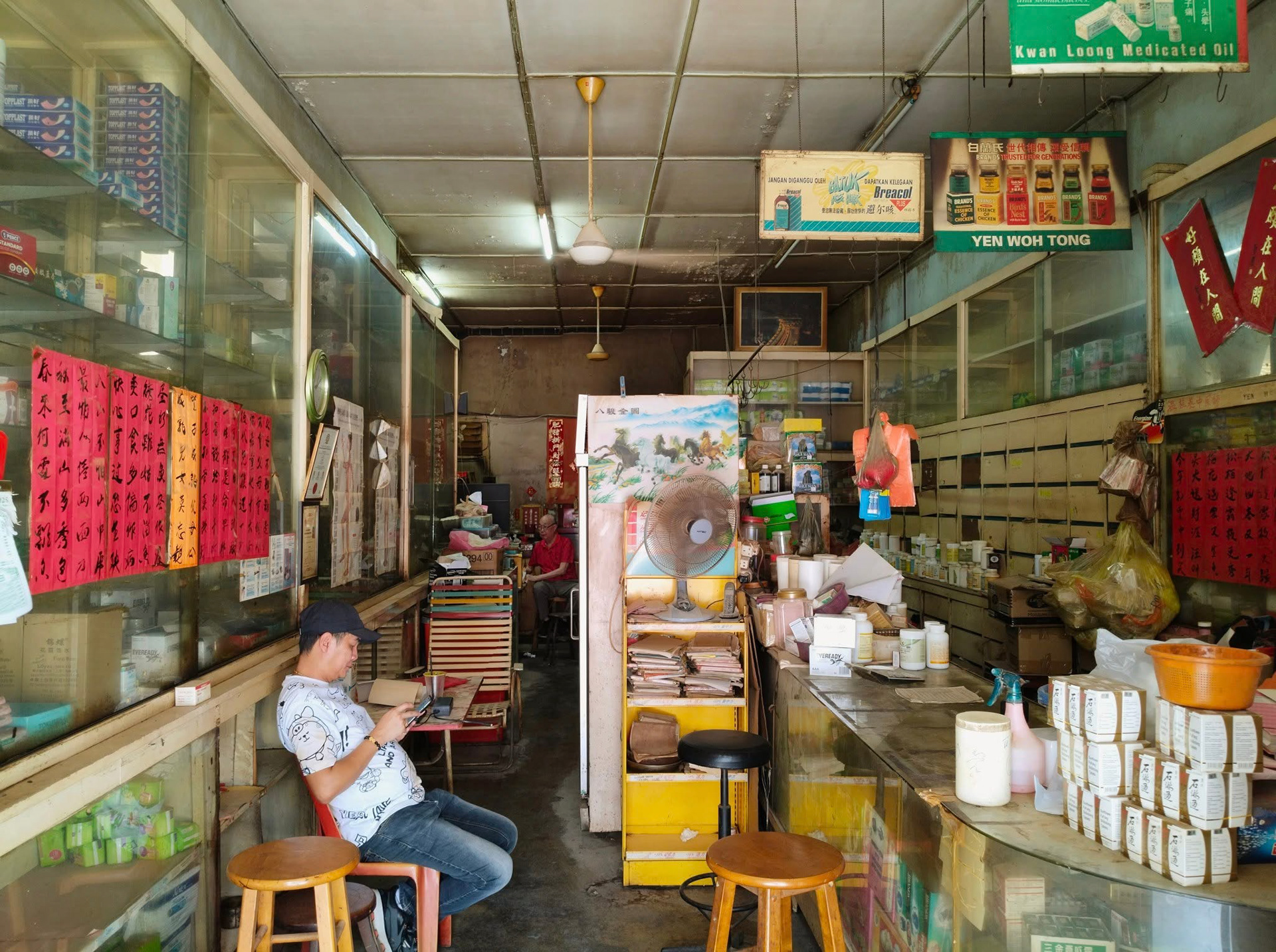
At the very back of Yen Woh Tong Medical Hall, past the glass cabinets of medicated oils and neatly labelled drawers of herbs, in a pocket of shadow untouched by time, sits the boss; half-hidden, half-myth.
The air inside is cool and dim, scented with the earthiness of dried roots, aged wood, and ancient remedies. Old fluorescent lights hum above, casting a soft glow on the well-worn countertops lined with porcelain jars, bottles of medicated oil, and neat stacks of Chinese newspaper. Red calligraphy scripts hang on the glass and walls. 

He is squatting into the curve of an old rattan chair, its weave slightly loosened by the decades, its frame sighing with the weight of familiarity. The corner he occupies is dim, lit only by the flickering light of an old television—its colours faded, streaked with static.

The news plays softly, a Mandarin anchor reading headlines of a world that seems so distant from this room, so fast and foreign. I imagine that to him, the outside world is only a passing ripple on the deep, still pond of his universe. 

Around him, stacked herbal journals, wooden stools, yellow drawers, old calendars, and hand-written notes form a cocoon of memory. The fan turns lazily, blowing warm air over a wall hung with red cloth talismans.
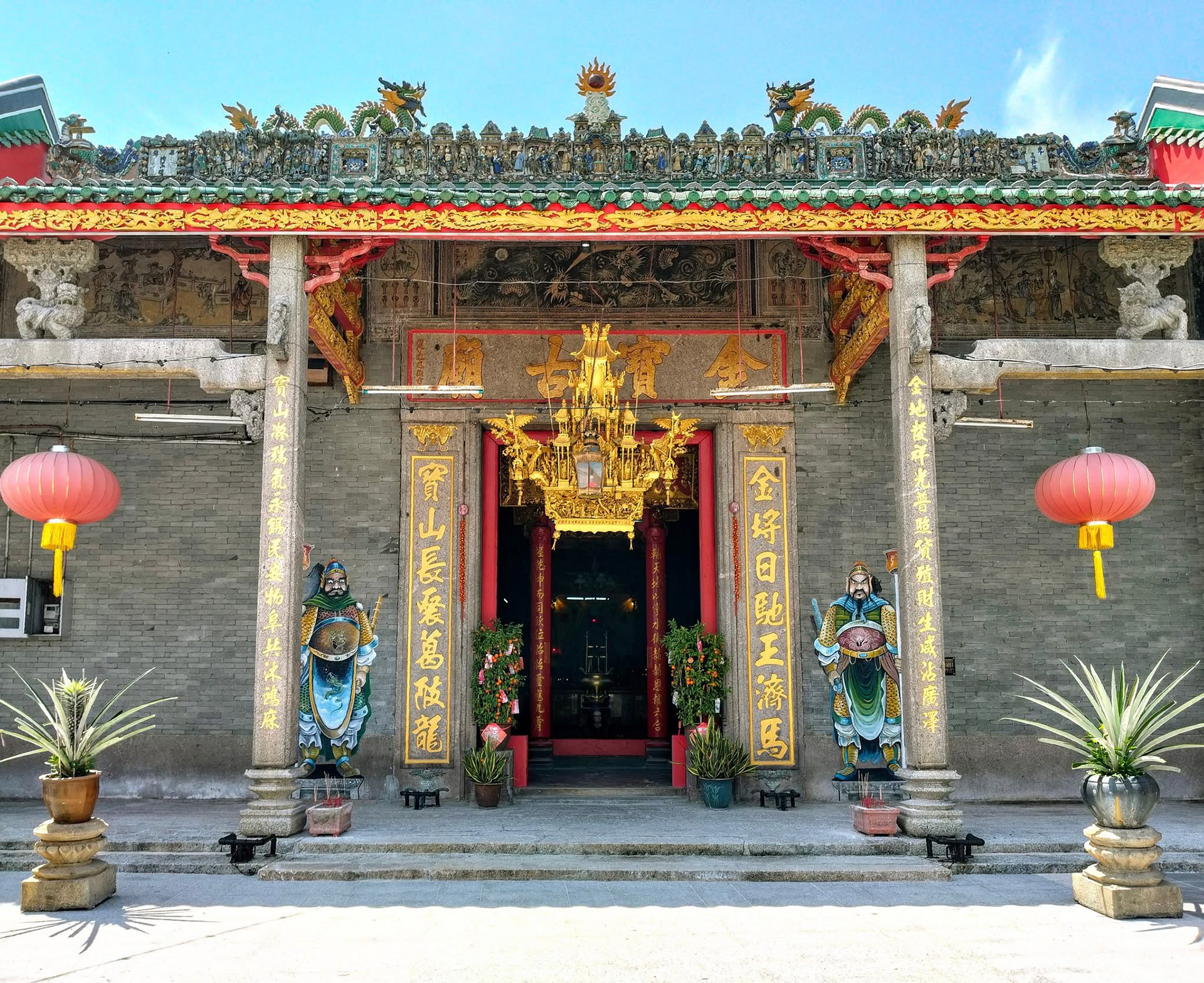
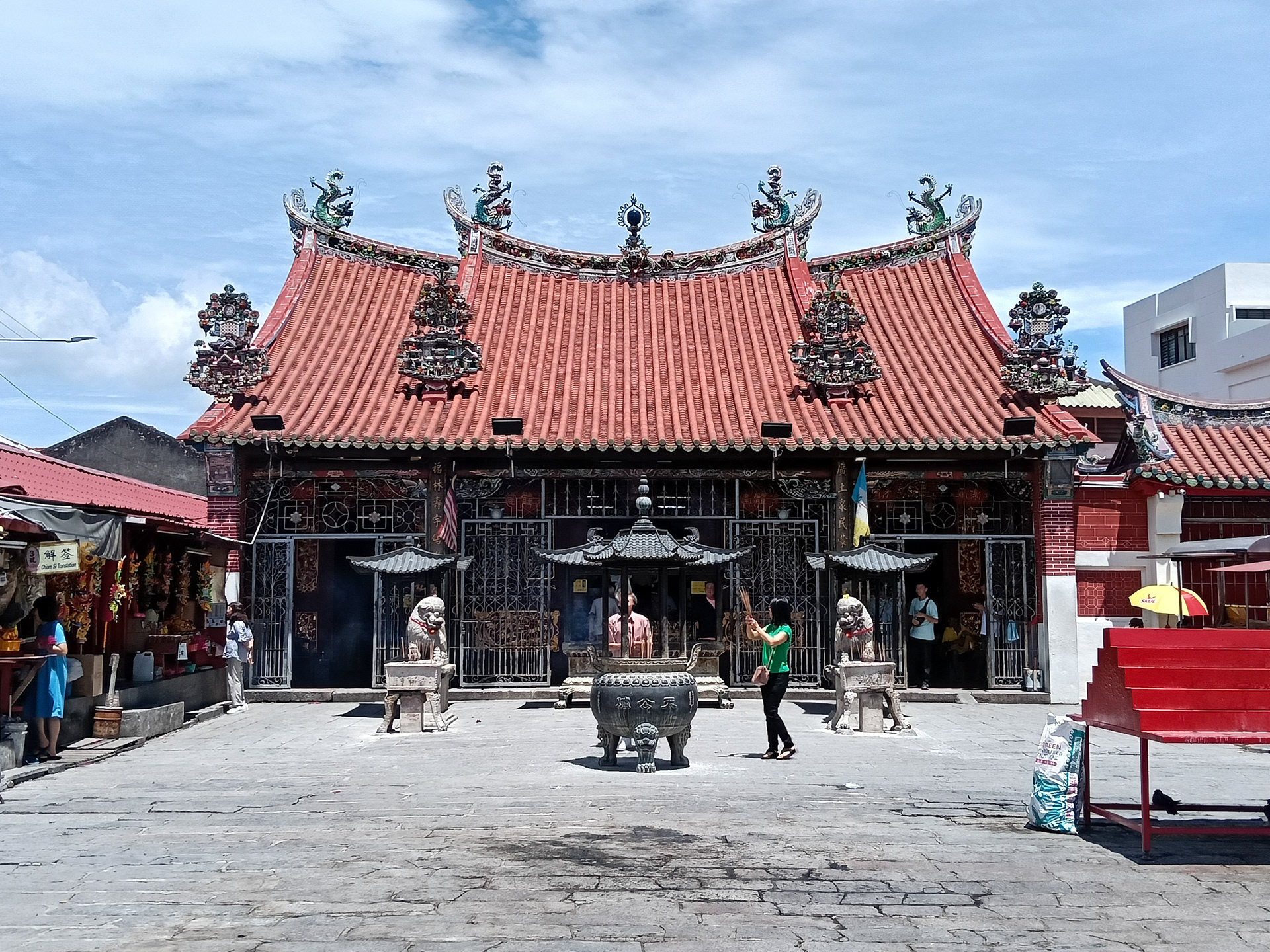
The ancient Kampar Temple, known as 金宝古庙, venerates Guanyin Bodhisattva as its principal deity, revered by generations of mining families who sought her protection for safety and prosperity before delving into the tin-rich earth. Alongside her stands Datu Gong (大伯公), the earth guardian also known as 坲邑郎 or 坲㙟稳当, whose steadfast presence assures stability in mining ventures and peaceful resting places. His image and the inscription “坲㙟稳当” embody this vital guardianship. 
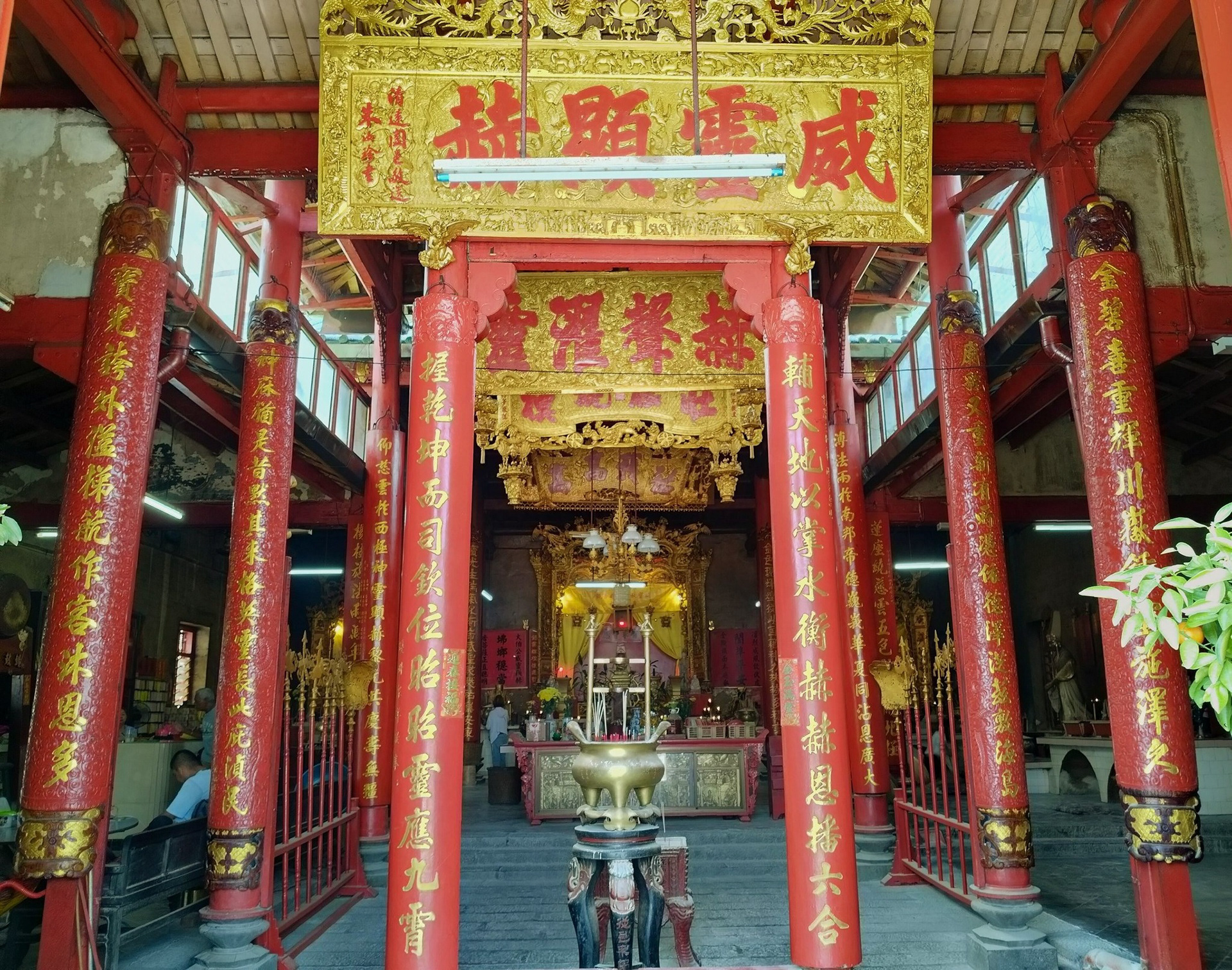
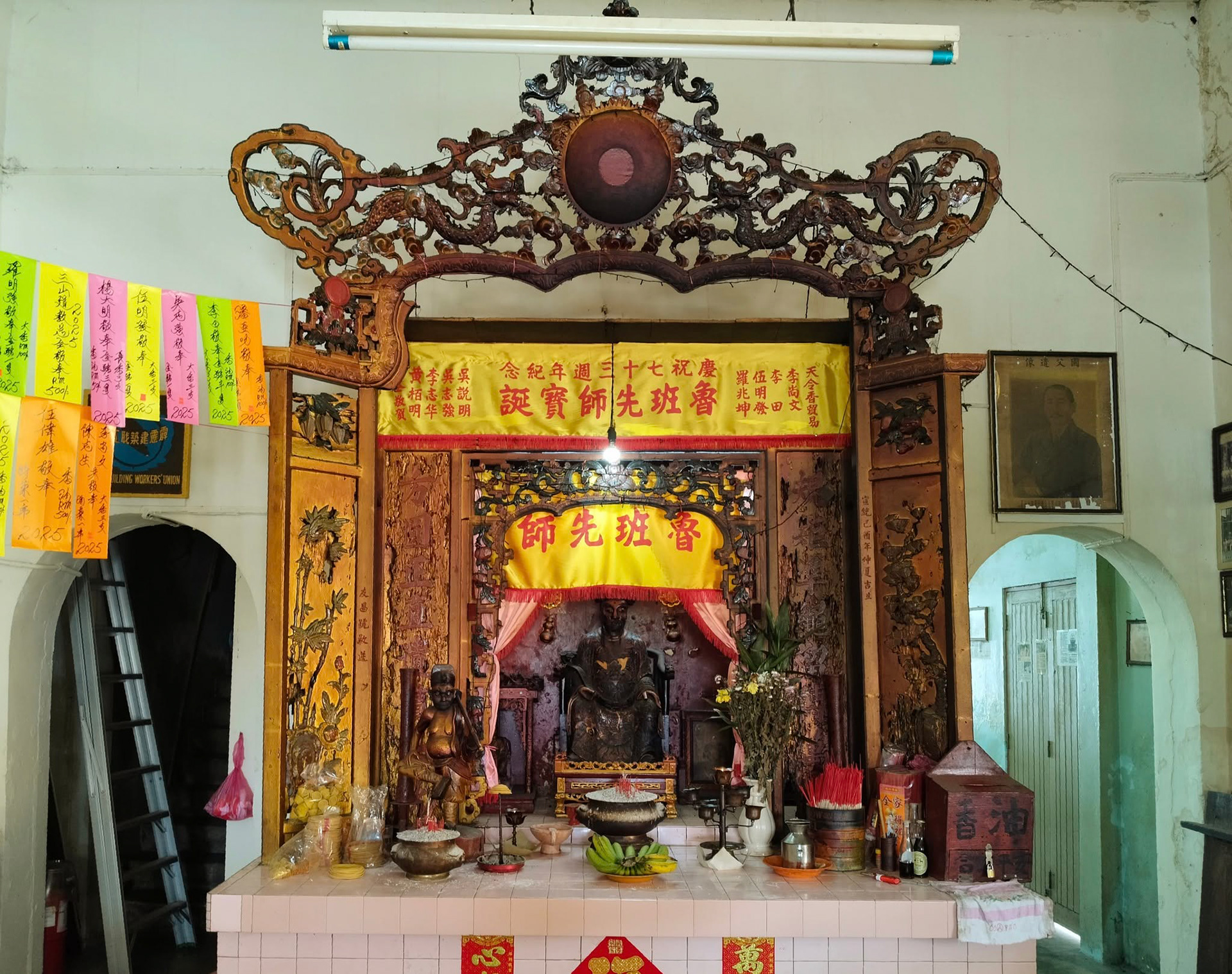
The Lu Ban Temple 鲁班庙 is no opulent structure nor towering monument, but a lone building that carries within it the fierce spirit of a hundred years of craftsmanship, devotion, and silent resilience. Established in the lunar midsummer of 1909, during the first year of the Xuantong reign, this temple has endured like an old mahogany, weathered, rooted, and ever watchful. The plaque above its entrance still bears the classical inscription of its birth:
“宣統元年歲次己酉仲夏榖旦立”,
marking a moment in time that has since unfurled into more than a century of reverence. It may look unremarkable to the hurried passerby, a single detached building of modest stone and tile. But this is only the surface. At its five-foot way stand two golden stone lions, frozen mid-roar, their forms gleaming faintly beneath layers of tropical sun and dust. These are sentinels of a bygone world. They were delivered to this temple at its very founding, cast in stone and in symbolism; creatures of power in traditional Chinese architecture, defenders of doorways, guardians against evil.

Between them, the wooden doorframe unfolds like a scroll of living poetry. Upon its crimson pillars, couplets glimmer in gold:

“功業仰千秋名高東魯”

His achievements are revered through a thousand autumns, his name exalted across the eastern land of Lu.

“威靈傳萬古爵錫北城”

His divine power echoes through ten thousand generations, his title ennobled in the northern stronghold. I ponder if “北城”, is perhaps a reference not only to Lu Ban’s legendary ennoblement, but also a poetic nod to Kampar itself, the fortress of tin and toil, now immortalized in couplets and craft.
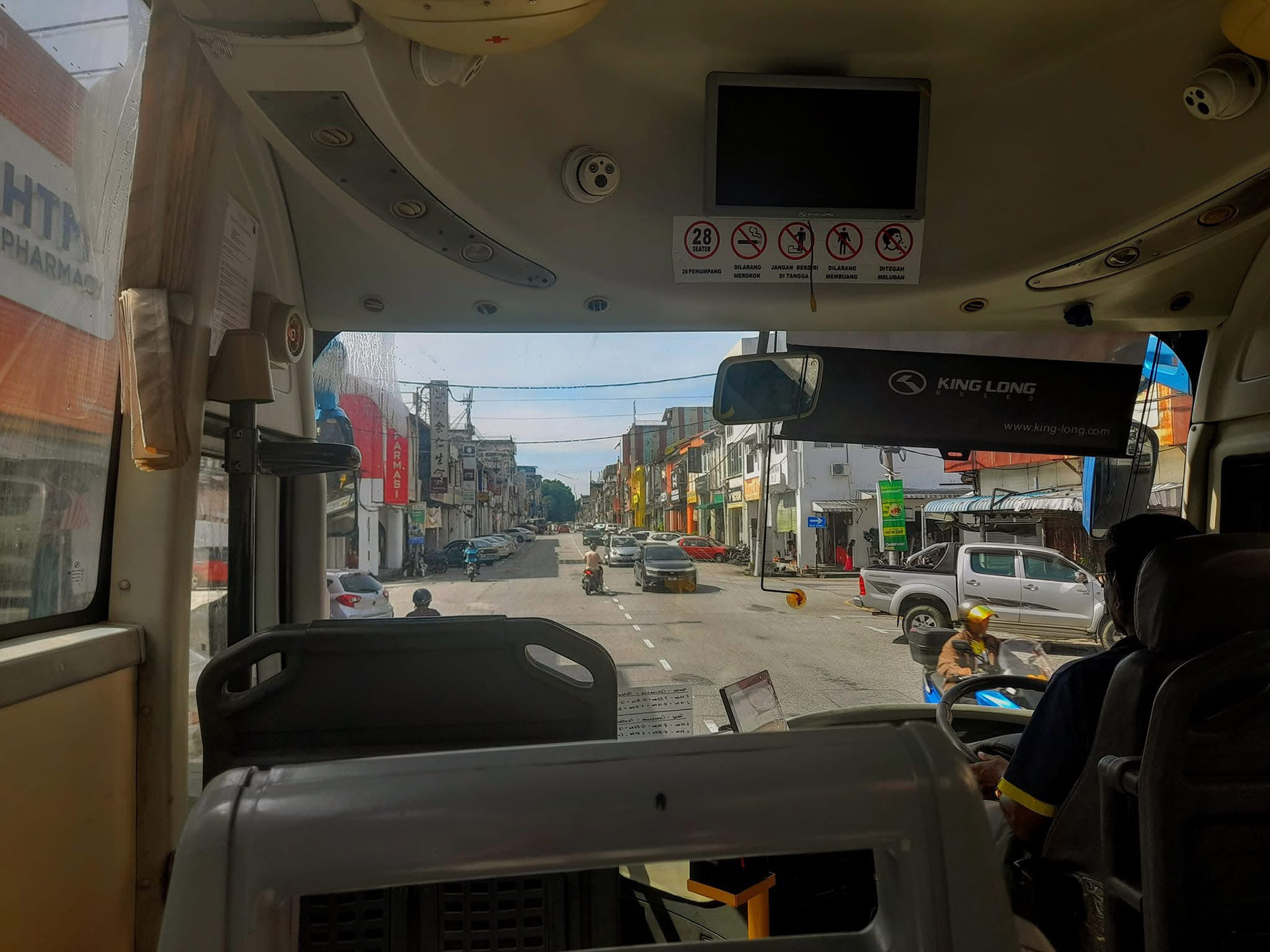
It is a town unbothered by pretense, utilitarian to its marrow, yet inexplicably beautiful in its raw, unadorned authenticity.
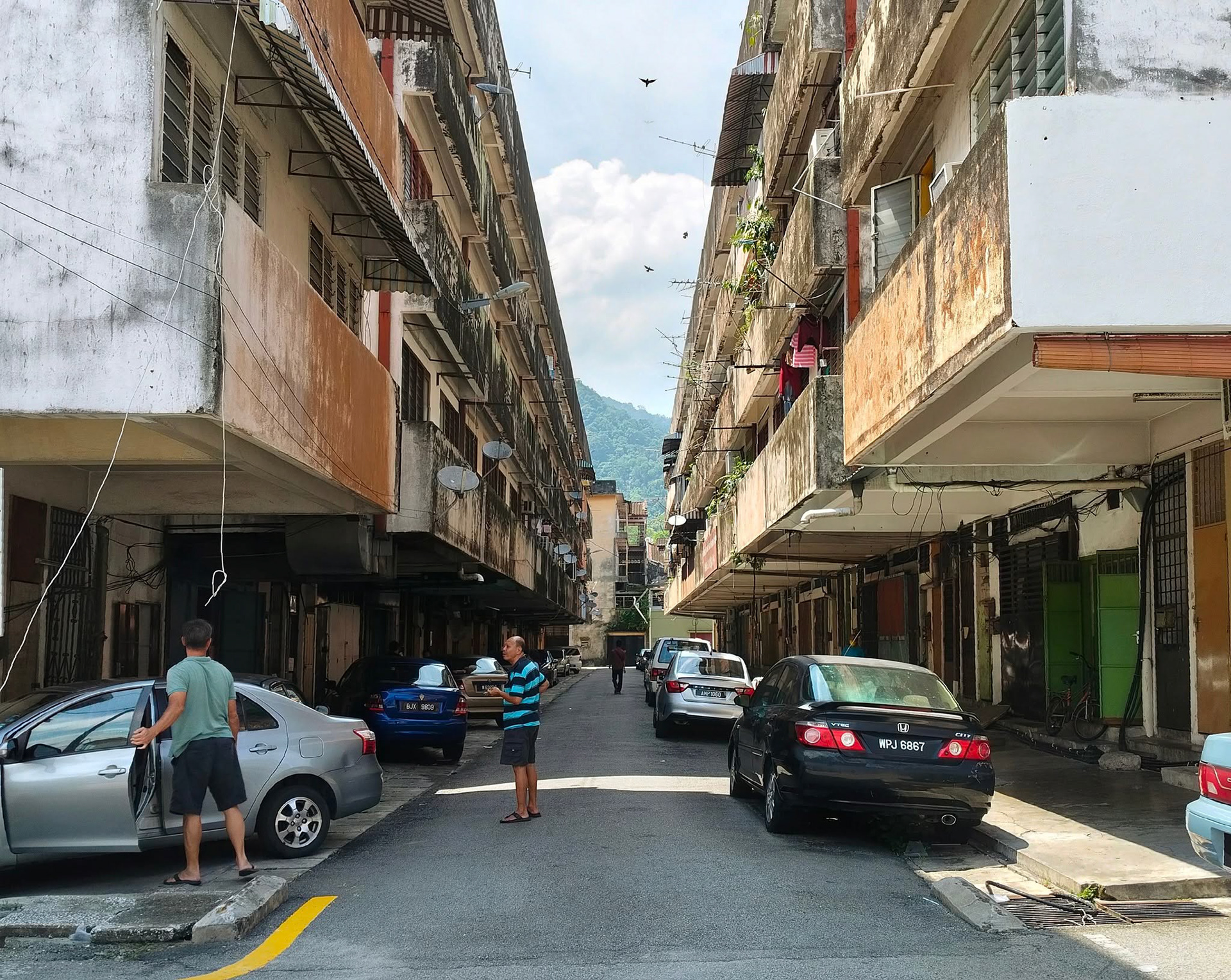
This back lane, caught in mid-morning light, is Kampar distilled—the everyday made immortal. The air carries a metallic stillness, as if memories cling to the walls. The flats, old government-style walk-ups, stand shoulder to shoulder like ageing comrades. Stained balconies bloom with overgrown pots, clotheslines fluttering like faded flags of defiance. Wires snake overhead, not out of chaos, but out of need, silent testimonies of a working town’s improvisation.
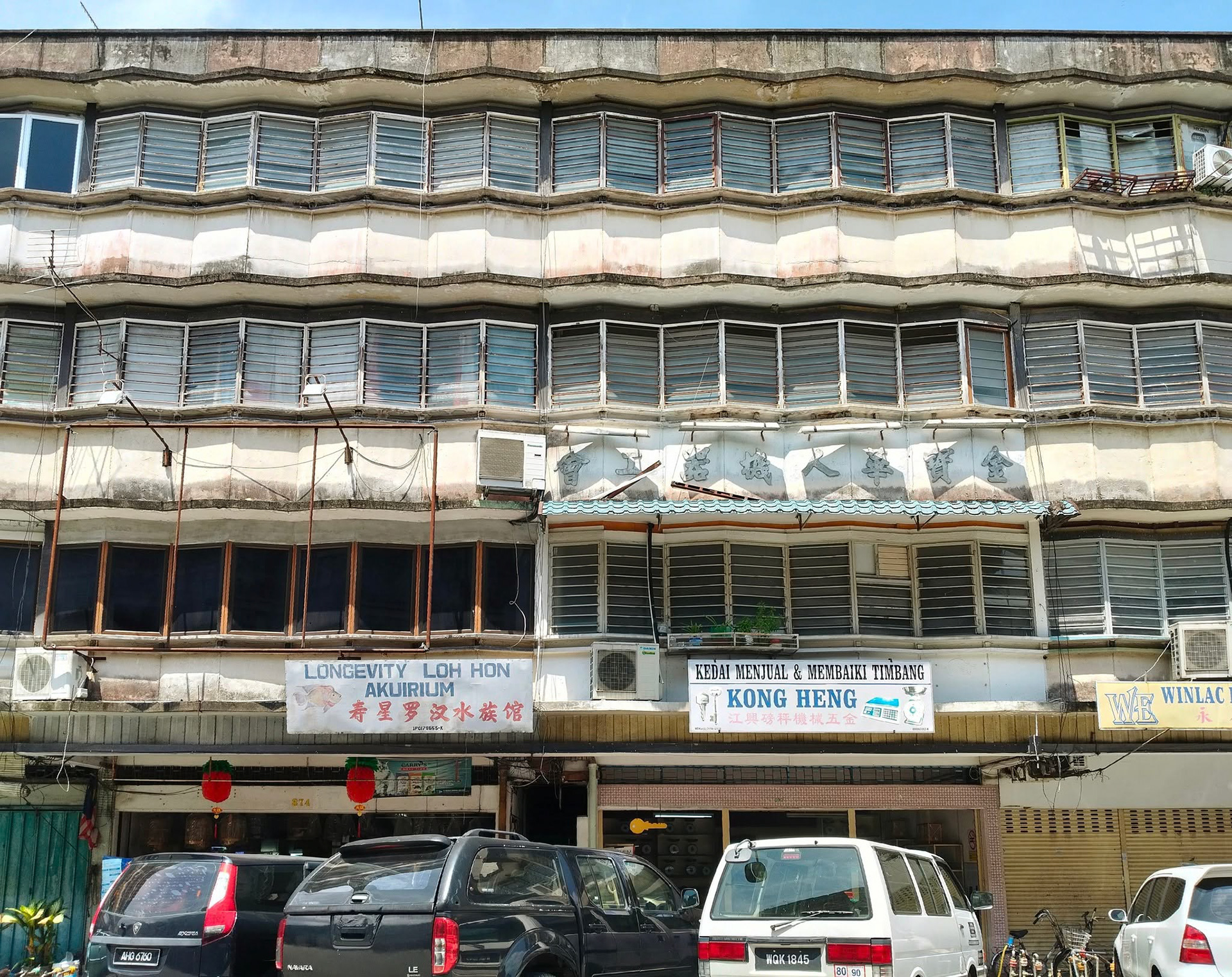
Yet Kampar’s beauty is not only at ground level. Look up, and you are greeted by the unique ripple of louvred windows adorning a commercial block, like waves across a modernist tide. This building, stained by weather and memory, is a masterpiece of working-class design. 

This back lane, caught in mid-morning light, is Kampar distilled—the everyday made immortal. The air carries a metallic stillness, as if memories cling to the walls. The flats, old government-style walk-ups, stand shoulder to shoulder like ageing comrades. Stained balconies bloom with overgrown pots, clotheslines fluttering like faded flags of defiance. Wires snake overhead, not out of chaos, but out of need, silent testimonies of a working town’s improvisation.

You may also like

Back to Top