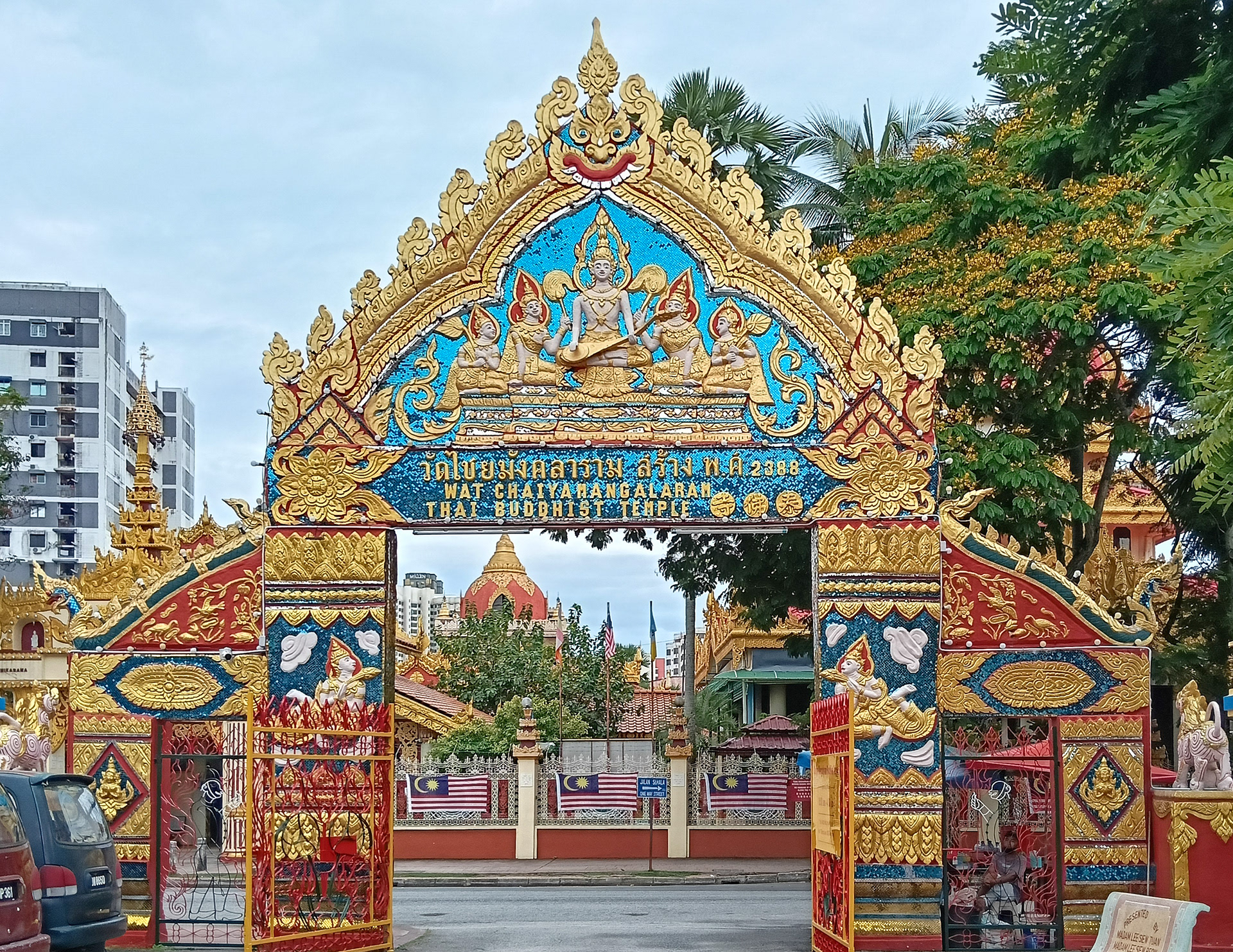
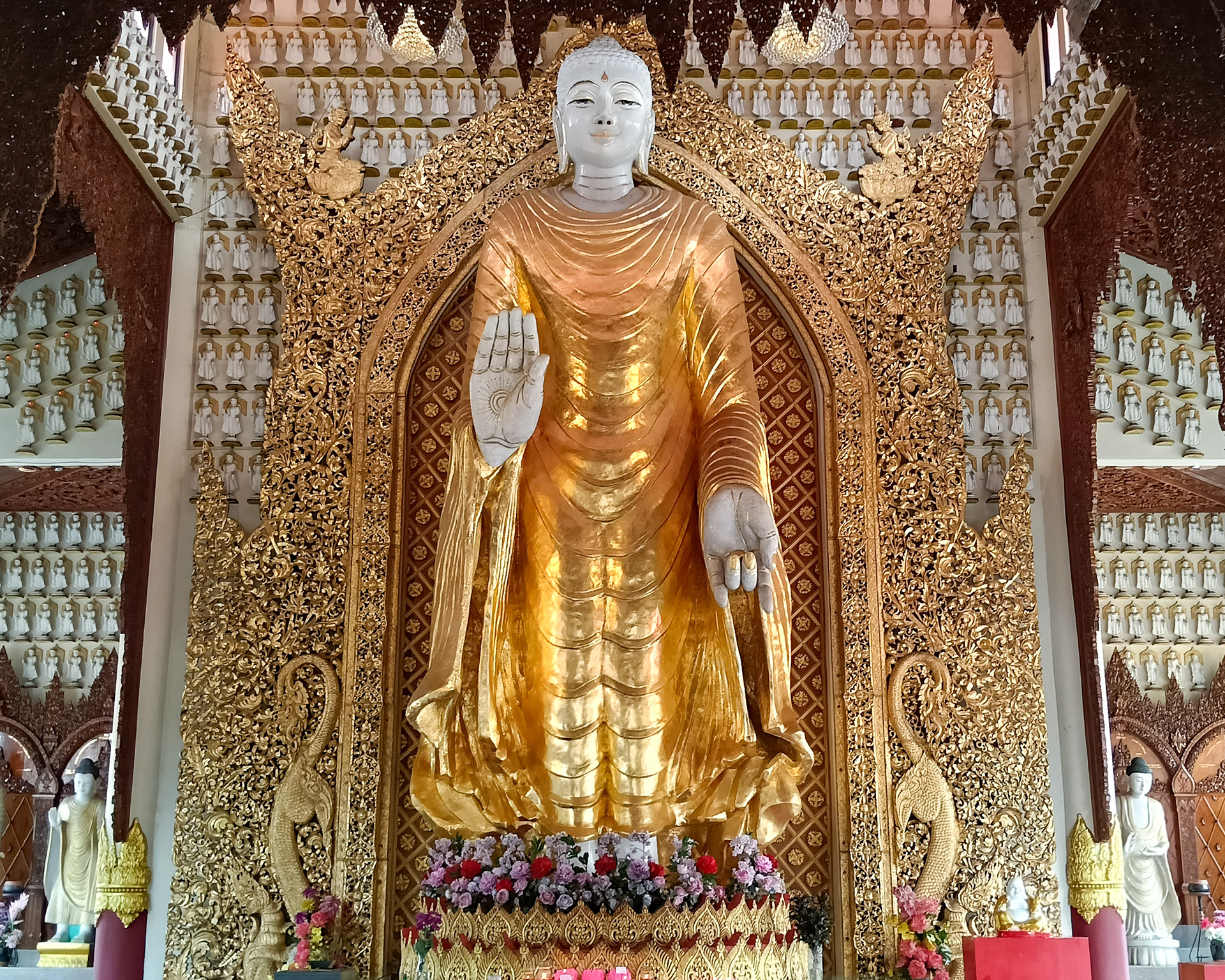
Tucked amidst the labyrinthine streets of Georgetown, the Burmese temple rises like a jewel of devotion, its gilded spires piercing the tropical sky. The scent of incense curls and drifts through the warm, humid air, carrying whispers of prayers and centuries-old rituals. Sunlight dances across the lacquered wood and gold leaf, making every carved figure—guardians, deities, and mythical lions—glimmer as if alive.
Inside, the temple is a sanctuary of quiet intensity. Vibrant murals stretch along the walls, narrating sacred stories in strokes of ruby, sapphire, and emerald. Each step across the polished floor echoes softly, swallowed by the hushed murmurs of worshippers kneeling in reverence. Lanterns sway gently, their flames casting flickering shadows that animate the intricate carvings, giving the impression that the past and present coexist here.
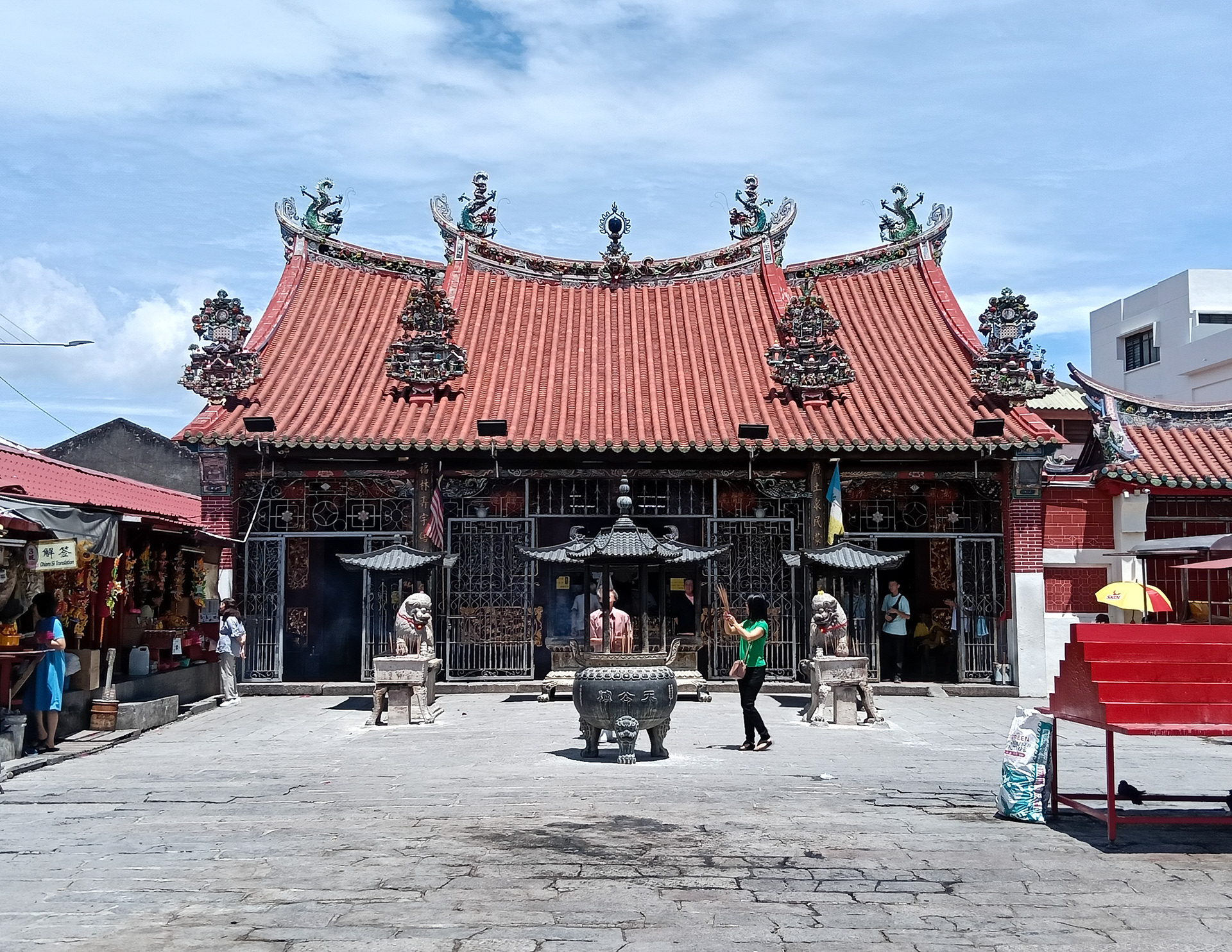
In the heart of George Town, Penang, along Jalan Masjid Kapitan Keling, stands a sanctuary that predates the city itself—the Goddess of Mercy Temple (Kuan Im Teng, Kong Hock Keong). Founded in 1728 by early Chinese settlers from Fujian and Guangdong, this temple is the oldest Chinese place of worship on the island, rising long before Captain Francis Light formally established George Town in 1786. In its earliest days it was dedicated to Mazu, the sea goddess who safeguarded sailors and merchants as they crossed the treacherous Malacca Strait. For these pioneers, the temple was both a beacon of faith and a refuge of hope in an unfamiliar land.
As the Chinese community in Penang grew and prospered, the temple’s heart evolved. By the early 19th century, its central devotion turned to Guan Yin, the Bodhisattva of Mercy, whose infinite compassion spoke to the struggles and yearnings of migrants carving out new lives far from home. It was Guan Yin’s gentle gaze that came to define the temple, transforming it into a sanctuary of solace for the weary, the troubled, and the devout. Around her altar, generations of Penang’s Chinese gathered to pray for mercy, guidance, and healing.
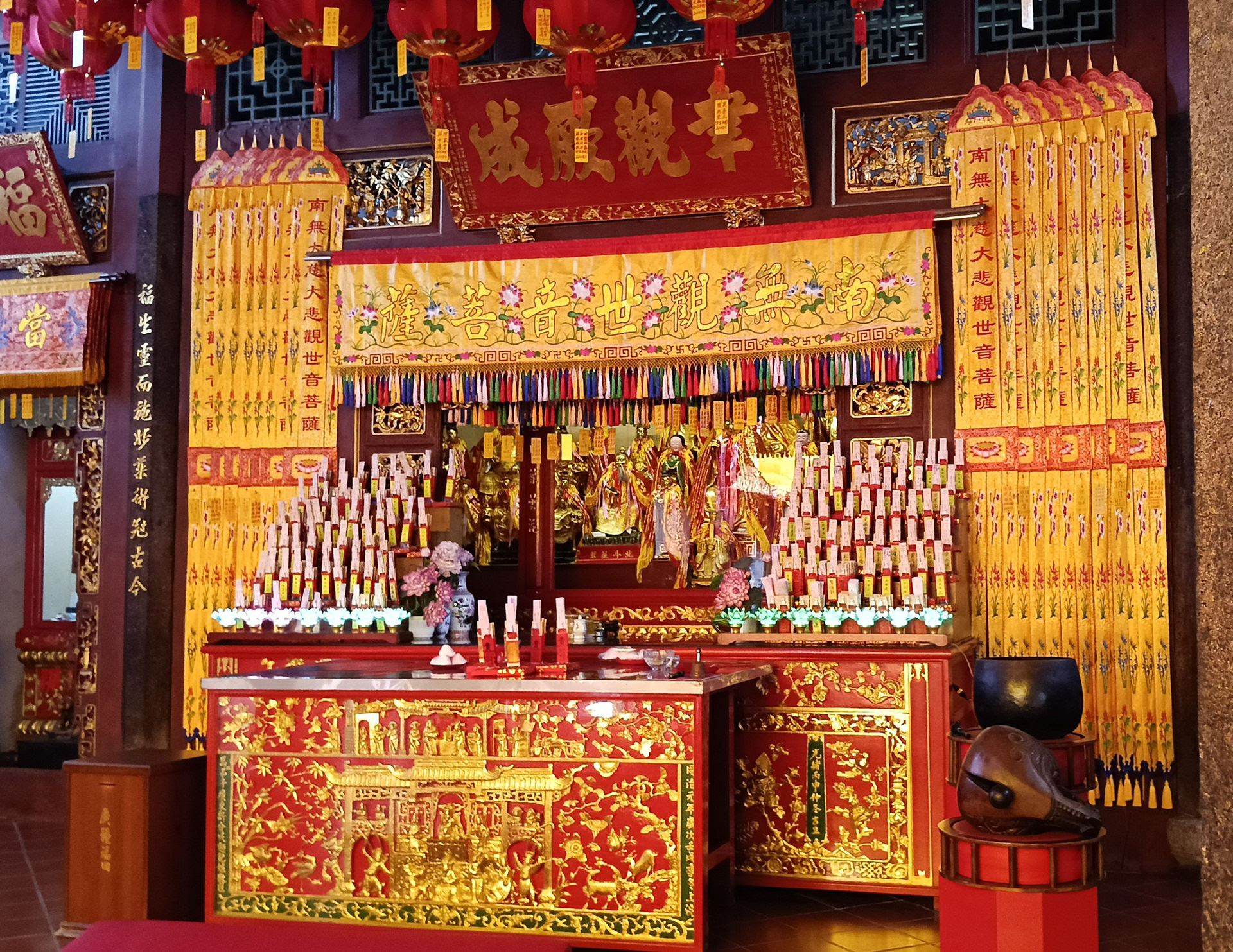
More than a house of worship, the temple was also a centre of community life. Here, beneath curling incense smoke, disputes between Hokkiens and Cantonese were settled, decisions for the wider community deliberated, and bonds of solidarity forged. In moments of strife, the temple served as a mediator and moral anchor. Even after the turbulence of the Penang Riots of 1867 and the founding of the Penang Chinese Town Hall in 1881 to handle secular matters, the temple endured as a place where compassion reigned above all.
Its architecture is a symphony of Southern Chinese artistry and symbolism. Granite pillars entwined with dragon carvings guard the entrance; sweeping tiled roofs bristle with ceramic immortals and mythical beasts, their colours brilliant against the tropical sky. Within, the golden glow of lamps and the fragrance of sandalwood embrace worshippers in timeless serenity. Hidden in its grounds are three ancient wells, one sealed beneath Guan Yin’s own altar, whispered in legend to hold healing waters. Chosen with feng shui precision, the temple sits upon auspicious ground where the currents of heaven and earth converge, lending it a presence that feels at once earthly and divine.
Through centuries of change, the Goddess of Mercy Temple has stood unshaken. It weathered colonial expansion, communal strife, and even the bombs of the Japanese invasion during the Second World War, when surrounding buildings crumbled yet its sacred halls remained untouched. Renovations over time have preserved and renewed it, most recently in the twenty-first century.
In the heart of George Town, along historic Chulia Street, rises a sanctuary that embodies the spirit of the Teochew people—the Han Jiang Ancestral Temple. Founded in 1870 by the Penang Teochew Association, itself established in 1855 by six Teochew immigrants, the temple was a gathering place, an ancestral hall, and a cultural anchor for a community finding its place on foreign shores. Known also as the Teochew Temple or Han Jiang Teochew Temple, it remains the only temple in Penang built in authentic Teochew style.
The temple venerates Xuan Tian Shang Di (玄天上帝), the God of the North, revered by Teochews as a protector and guide. Around his altar, migrants once gathered to pray for safe passage, prosperity, and the wellbeing of their kin. Yet the temple was not solely divine—it was human. Within its walls, ancestral tablets were enshrined, preserving the memory of the departed; disputes were resolved, and bonds of solidarity strengthened. It became, in its essence, both a sanctuary of the gods and a mirror of the Teochew soul.
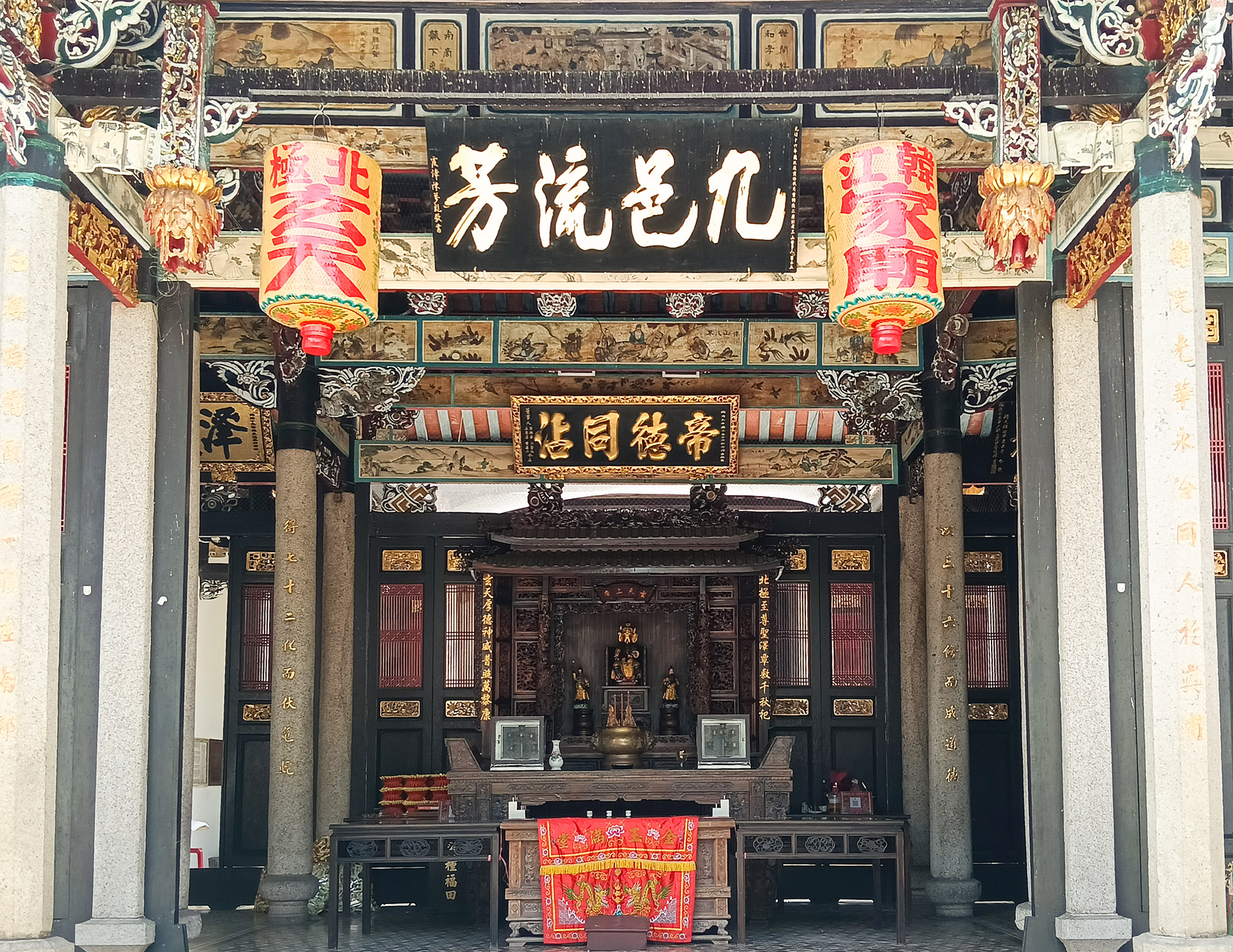
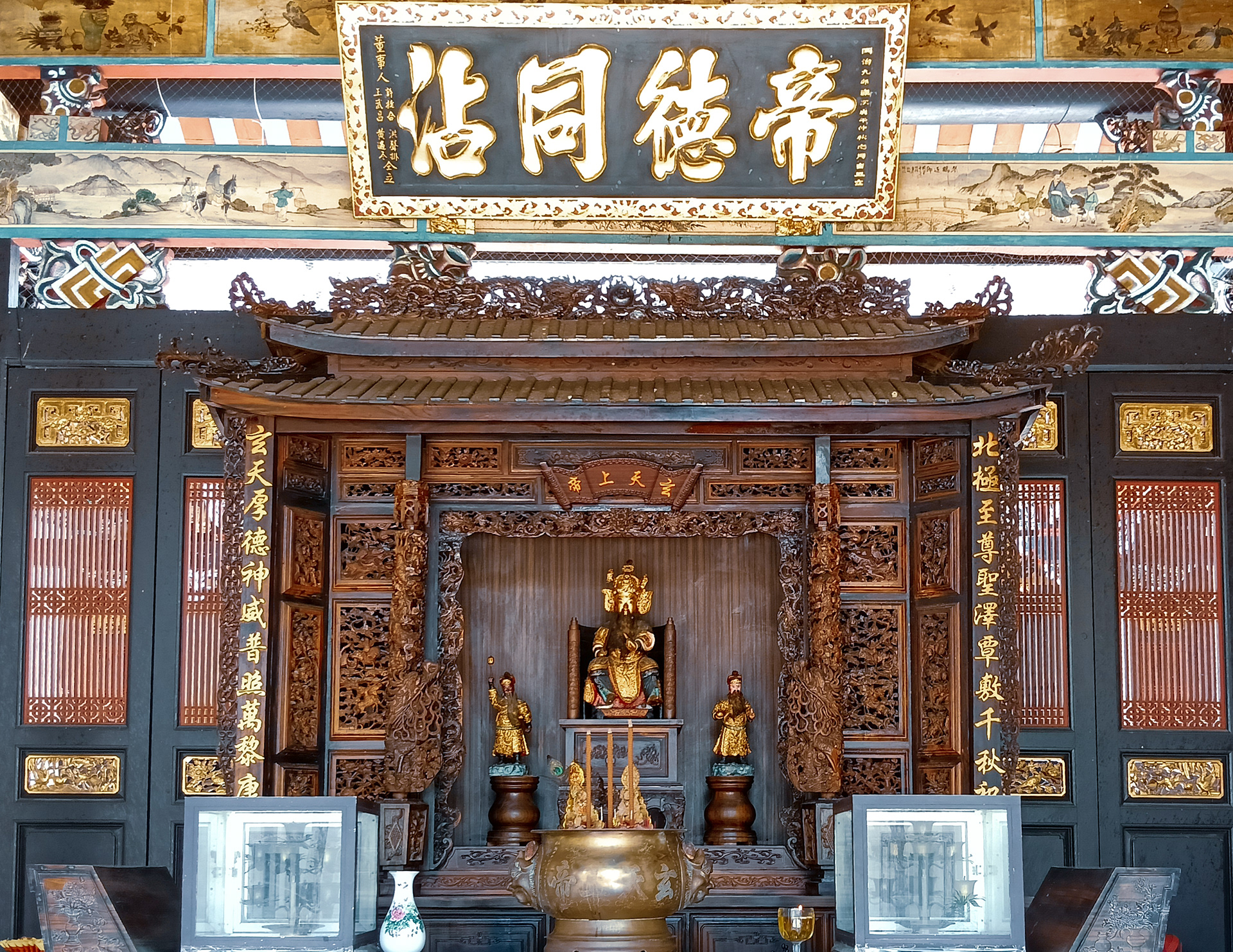
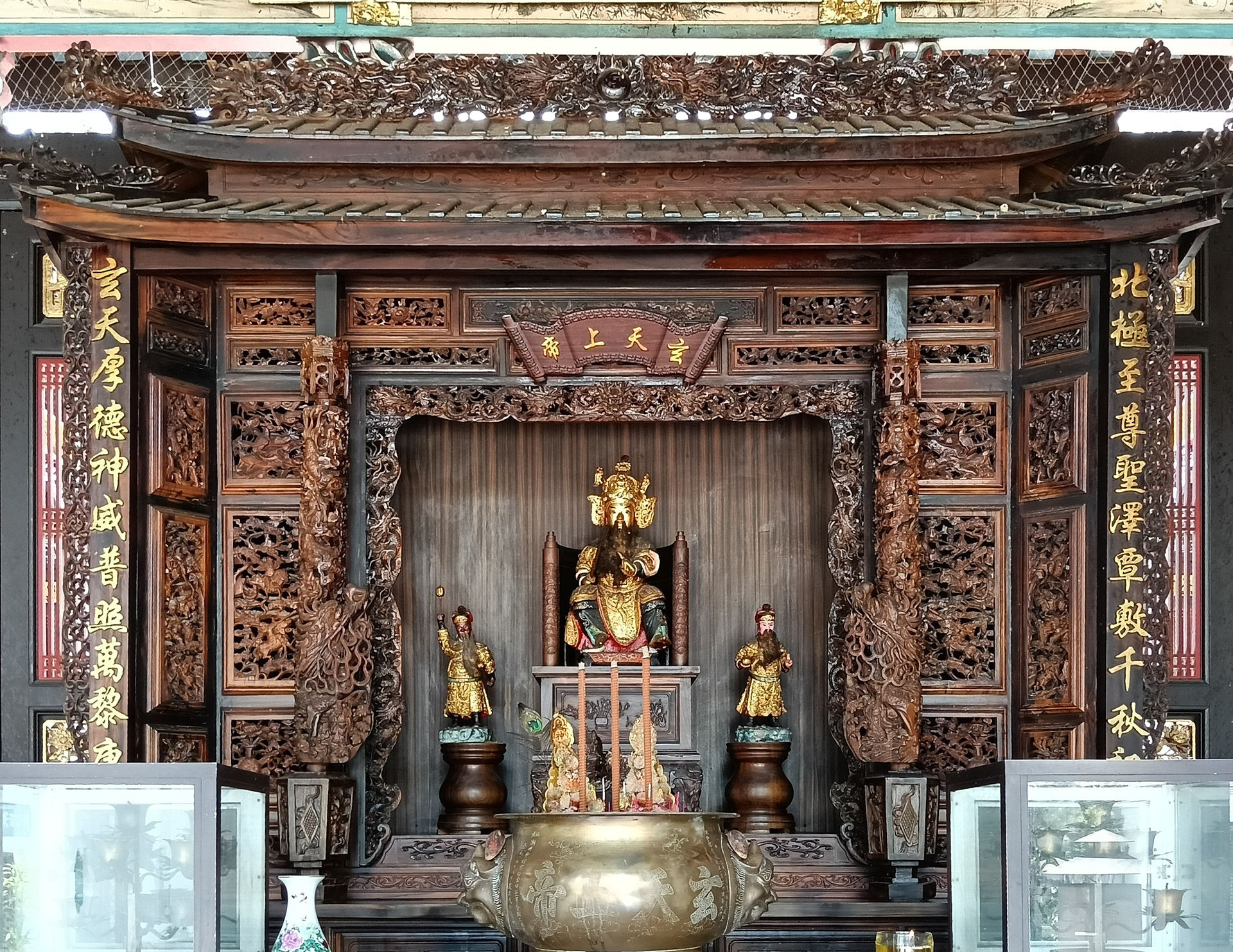
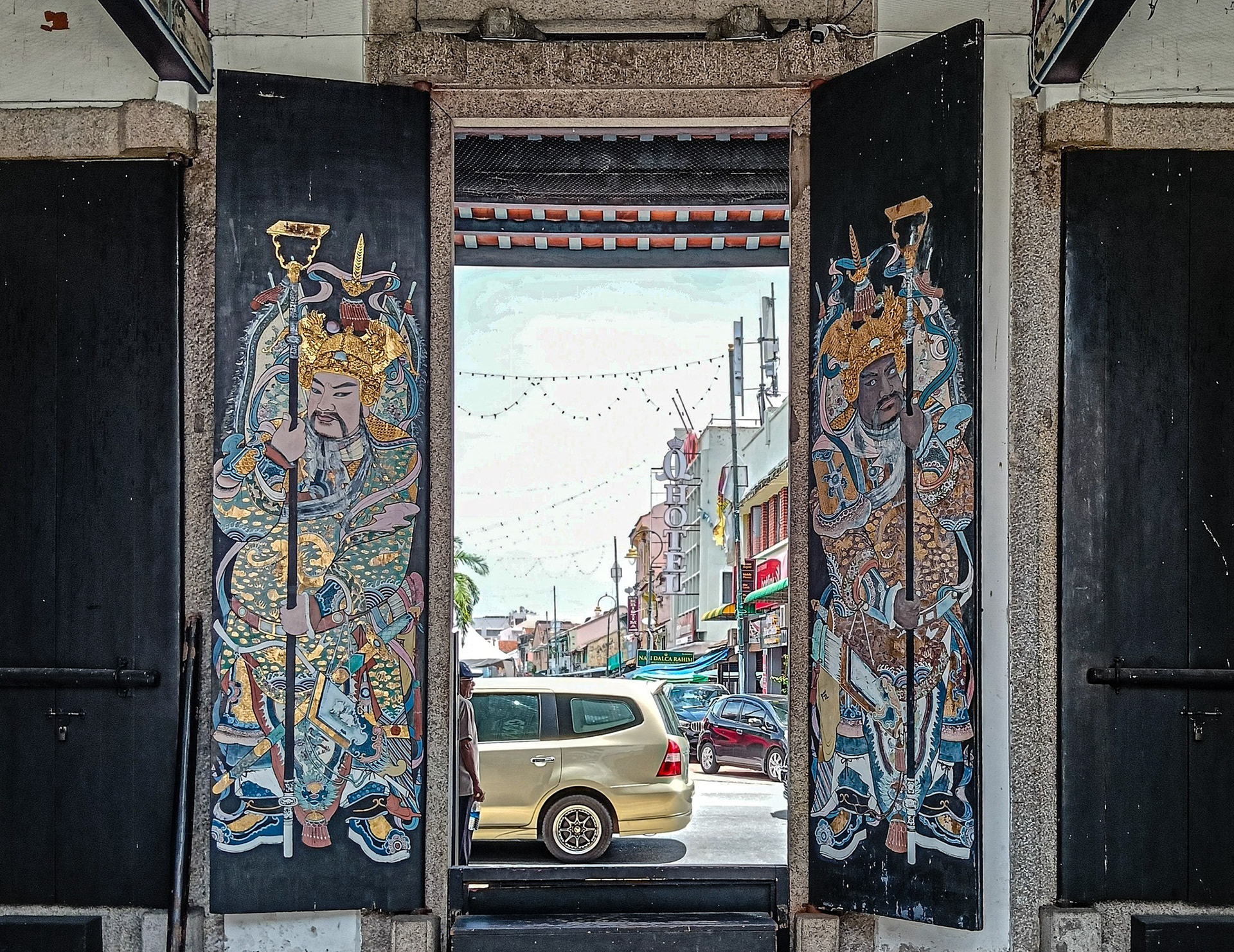
Its architecture is unlike any other in George Town. Constructed in the “si dian jin” (四点金) style, a quadrangle of hipped roofs enclosing an inner atrium, the temple speaks the quiet poetry of Teochew design. The exterior, plain and restrained, belies the splendour within. Once past the guardian doors, one enters a world alive with colour and craft: granite pillars entwined with dragons, porcelain shard mosaics (chien nien) dancing with mythic figures, gilded timber beams etched with delicate carvings, and frescoes breathing stories into wood and wall alike. Air-wells open the interior to sky and light, linking heaven and earth in a geometry of faith.
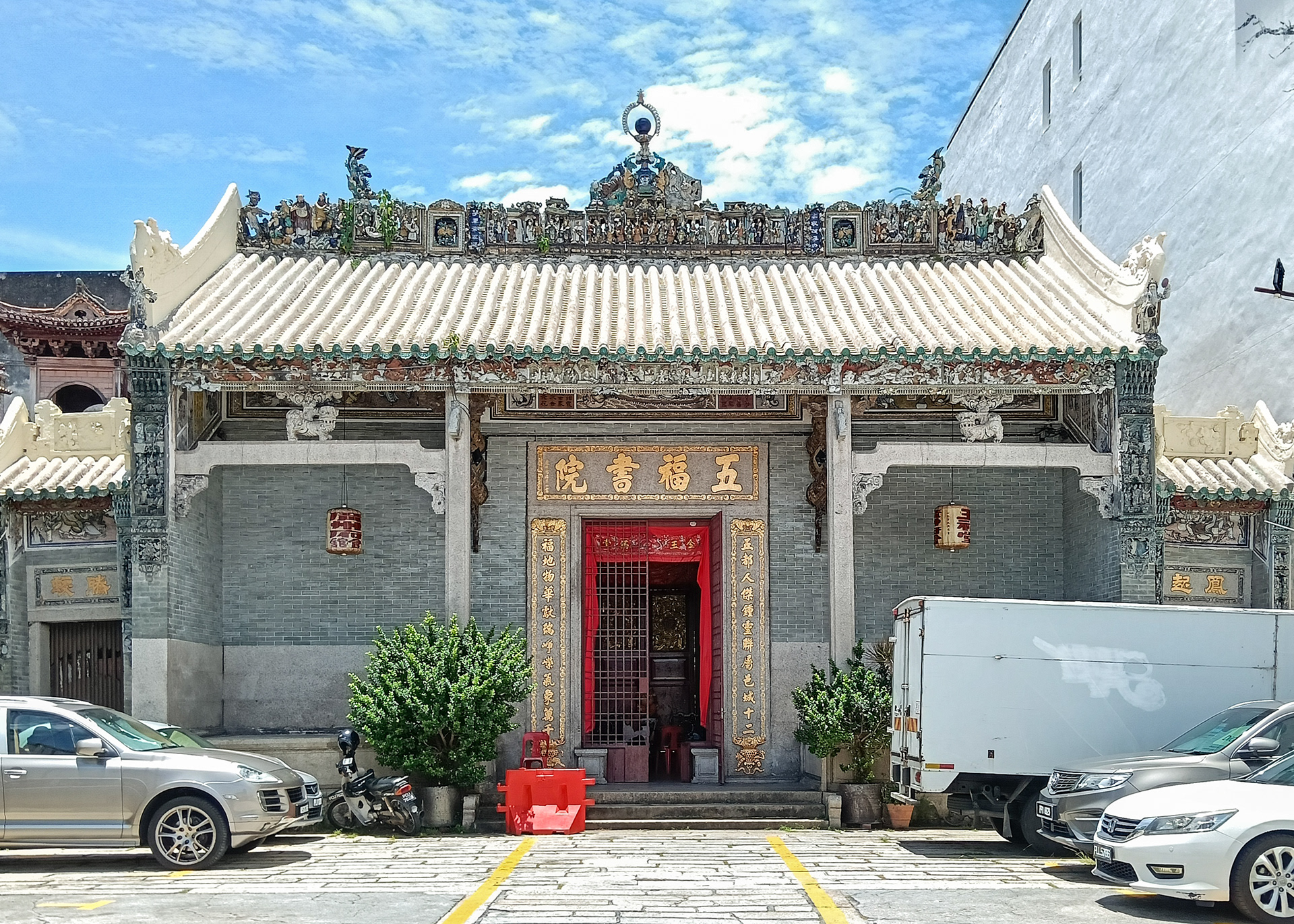
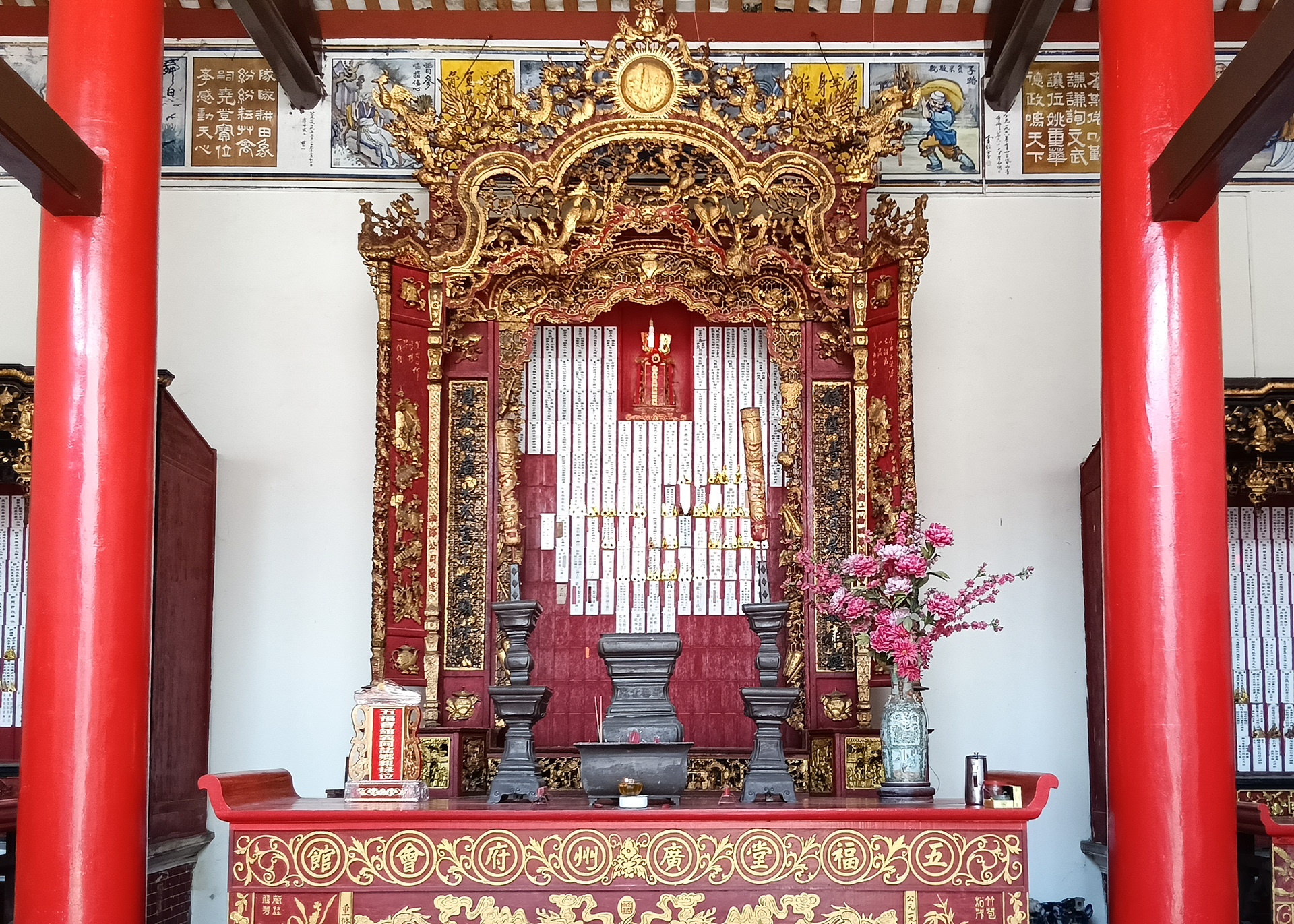
Nestled along the historic Chulia Street in George Town, Penang, stands the venerable Ng Fook Thong Temple, also known as Tokong Ng Fook Thong or 五福堂. This sacred space is not merely a place of worship but a living testament to the resilience and unity of the Cantonese community in Malaysia.
Established in 1819 by the Ghee Hin, a prominent Cantonese secret society, the temple's name translates to "Five Blessings Hall," symbolizing prosperity, longevity, peace, virtue, and harmony. Originally serving as a gathering place for the brotherhood, it played a pivotal role in fostering unity among the early Chinese immigrants.
In 1898, under the stewardship of Kapitan Chung Keng Kwee, the temple was relocated to its current site on Chulia Street. Chung, a visionary leader, brought in craftsmen from Fook San, China, to construct a building that would serve not only as a place of worship but also as a school, the first Cantonese school in Malaya. This institution became a beacon of education, imparting knowledge and preserving the Cantonese language and culture for generations.